Learn about Junaimei through its company development, manufacturing capabilities, quality systems and business cooperation.
R&D & MANUFACTURING
Research-led development and lean manufacturing
As a fine-chemical and advanced-materials manufacturer, Junaimei combines technical innovation with lean manufacturing. An integrated process from fundamental research and pilot-scale development to full-scale production supports reliable delivery and consistent quality.
Automated production lines5 lines
Theoretical maximum annual output2,000 tonnes
Production control systemDCS / PLC / MES
Laboratory management systemISO/IEC 17025
Research and development
Our innovation program combines skilled people, development facilities and collaboration between industry and academia, focusing on formulation development, process optimization and application technology.
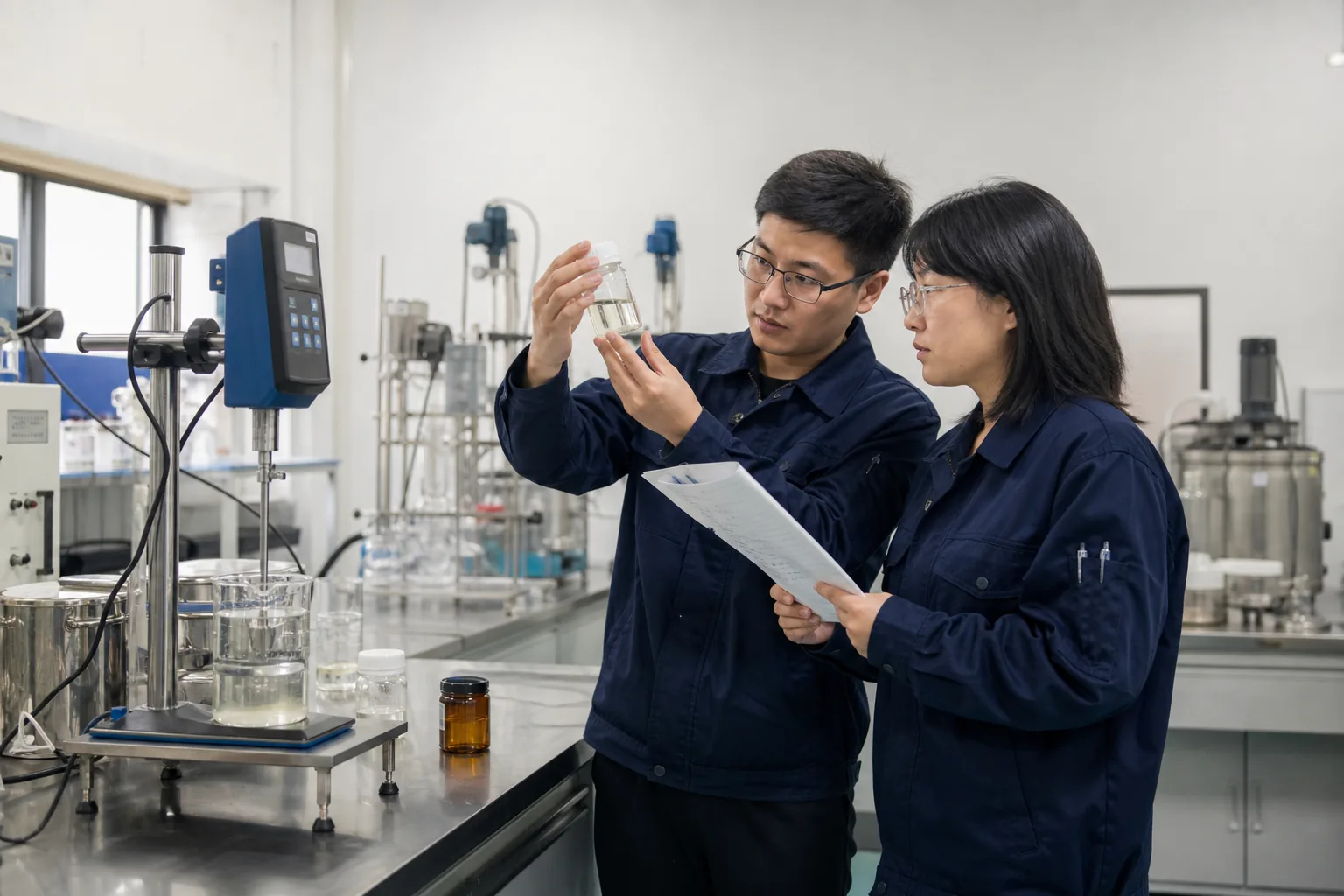
Research and pilot-scale laboratoriesDaily research covers formulation development, sample validation and process scale-up.
Experienced R&D team
Our R&D center brings together experienced industry specialists and researchers with doctoral and master's qualifications. Their interdisciplinary expertise and scale-up experience support tailored material solutions for practical application challenges.
Research and pilot-scale facilities
Modern research laboratories and a separate pilot workshop use scaled-down versions of production equipment to support a smooth transition from laboratory results to full-scale manufacturing and shorten new-product development cycles.
Continuous innovation and collaboration
Guided by market needs and sustainable development, we maintain ongoing R&D investment, hold national invention and utility-model patents, participate in industry-standard development and collaborate with universities and research institutes.
Test equipment
Quality management covers incoming raw materials through finished-product dispatch. Instruments undergo regular third-party calibration to support accurate, consistent and traceable test results.
Precision chemical analysis
Gas chromatography (GC), high-performance liquid chromatography (HPLC) and Fourier-transform infrared spectroscopy (FTIR) support analysis of raw-material purity, product composition and unidentified substances.
Physical and rheological properties
High-precision rotational viscometers, rheometers, grind gauges and density meters monitor rheology, application properties and physical condition.
Environmental and reliability testing
UV/xenon-arc weathering chambers, temperature/humidity cycling chambers, salt-spray chambers and universal testing machines support evaluation of durability, adhesion, tensile strength and weather resistance.
Application simulation testing
An application-testing area equipped for coating, dispensing and adhesive application helps relate laboratory results to customers' actual operating conditions.
Production equipment
The manufacturing site combines automation, process control and environmental, health and safety systems to support consistent production.
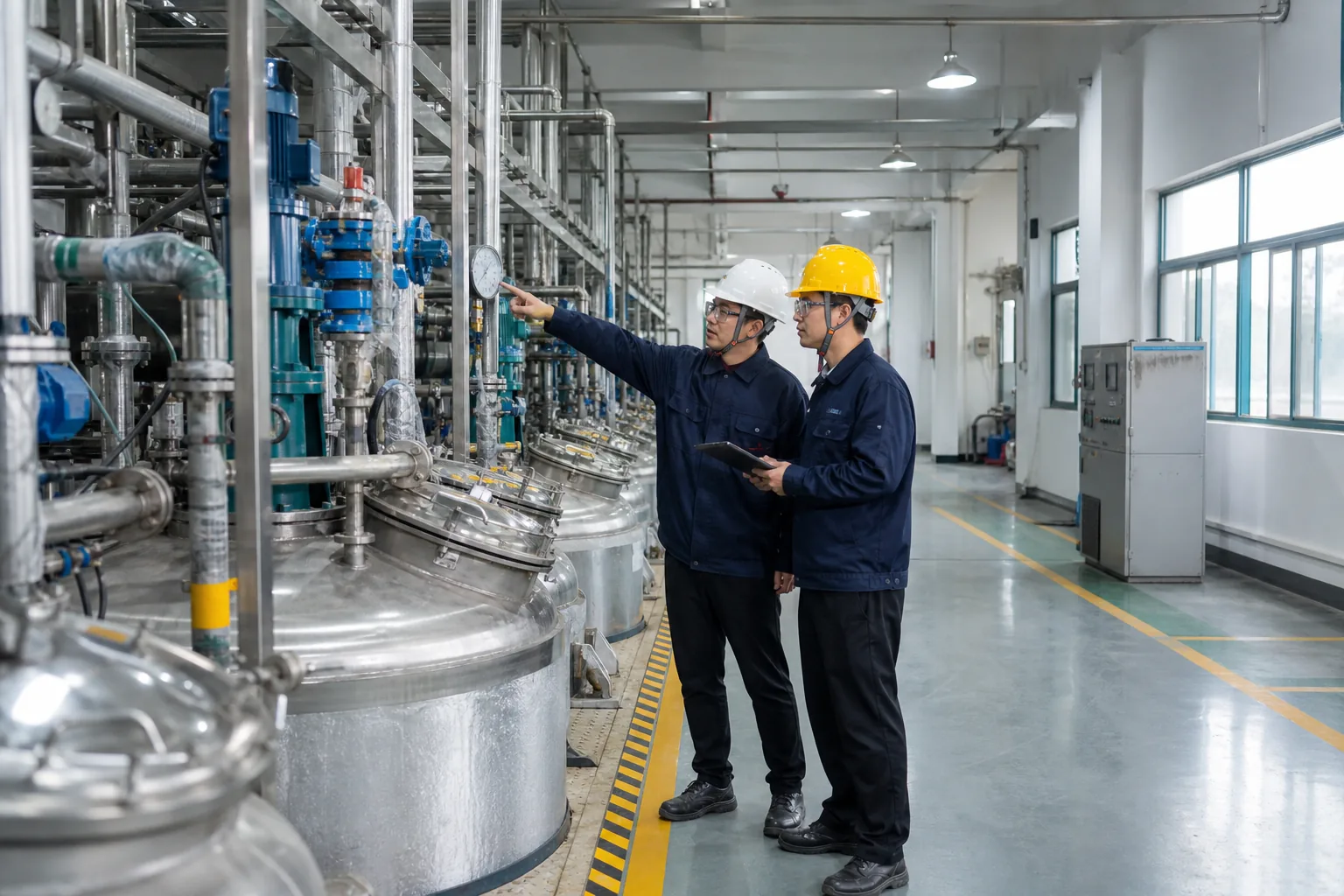
Automated production workshopReaction control, process monitoring and site inspections work together to maintain stable production.
Core manufacturing systemFive automated production lines
Equipment includes multifunctional 304/316L stainless-steel reactors, high-speed dispersers, pin-type or turbine-type bead mills, and automated weighing, filling, carton sealing and palletizing lines.
Reduced manual handling and more efficient, cleaner packaging
Support for nanoscale fineness and multi-product manufacturing
Scalable production with flexible changeovers
Automation and control systems
DCS and PLC control systems integrate with a manufacturing execution system (MES) for automatic recipe transfer, weighing error prevention and real-time production monitoring, reducing manual intervention and improving batch consistency.
Process utilities and EHS facilities
Process utilities
Precision thermal-oil and cooling-water systems control reaction temperature, while vacuum systems remove entrained air and moisture from materials.
Environment and safety
Facilities include RTO/RCO treatment for VOC-containing exhaust and wastewater pretreatment. Production areas follow the specified Chinese Category A/B fire and explosion-protection requirements, with combustible-gas alarms and interlocks, explosion-protected electrical equipment and water/foam firefighting systems.
Production and delivery capacity
Automated equipment, flexible production planning and warehouse/logistics systems support large-volume orders, customized requirements and efficient international delivery.
Capacity and production flexibility
The plant's theoretical maximum annual output is 2,000 tonnes. Five production lines support flexible changeovers between small customized batches across multiple products and large-volume production of fewer grades.
Scale and supply-chain advantages
Production scale helps spread fixed manufacturing costs, while strategic cooperation with core raw-material suppliers supports supply-chain resilience and cost stability.
Warehousing and logistics
Modern high-bay warehouses and an intelligent WMS support first-in, first-out (FIFO) stock rotation and dynamic inventory alerts. Coordinated logistics shorten delivery times and help products arrive on time, safely and intact.
Continued investment in research and manufacturing
Junaimei will continue improving its manufacturing systems through innovation and continuous improvement, creating long-term customer value through consistent product quality and dependable delivery.
Related information
Selection guide
This page describes raw-material management, production planning, process control and delivery at the polyaspartic manufacturing site, helping buyers assess the manufacturer's production and quality-management capabilities.