
Polyaspartic Floor-Coating ManufacturerProducts and Flooring Systems
Junaimei supplies polyaspartic floor coatings and selection support, from substrate preparation and leveling to intermediate coats and wear-resistant topcoats. Systems are specified for loads, traffic, slip resistance and appearance.
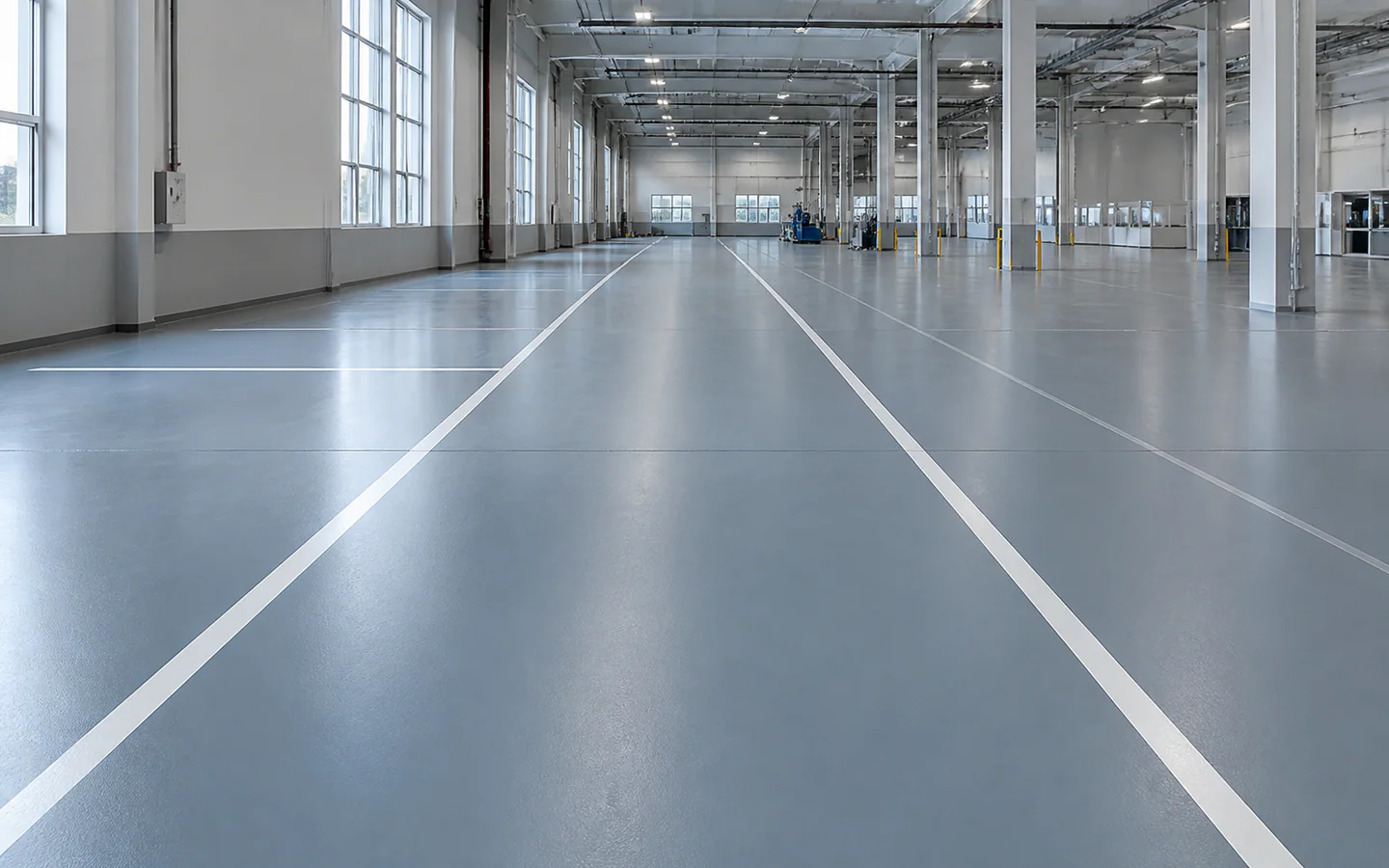
Select the system by intensity of use
Five flooring systems address different load, resilience, slip-resistance and decorative requirements. Technical values are typical references; inspect the substrate and approve an on-site sample panel before application.
Abrasion- and Scratch-Resistant Flooring
High-load, high-frequency traffic and clean maintenance requirements are being addressed, resulting in a smooth-painting system firmly integrated at the substrate.
Shaving features are prominent and suitable for areas of frequent vehicle and equipment traffic.
A balance between stress resistance, shock resistance and chemical resistance in general.
The whole body is seamless, clean and clean.
- Underground parking
- Food and medicine
- Smoke storage
- Automobile manufacturing
- Mechanical workshops
Recommended system level
| Test Item | Reference indicators |
|---|---|
| Adhesion (pull-off test) | ≥4 MPa |
| Impact resistance | 50 kg·cm |
| Pressure intensity | ≥70 MPa |
| Abrasion resistance (750 g / 300 revolutions) | ≤0.02 g |
| Dry Time | touch-dry ≤2 h; hard-dry ≤12 h |
Super PVC elasticizing
Increased elasticity, shock resistance and wetness control based on overall seamless and decorative performance.
Continuous surfaces are clean and control the overall decorative effects.
Combining foot feelings, wetness and shock absorption.
Abrasion resistance, scratch resistance and suitability for low-temperature application.
- Schools and public spaces
- Food medicine
- Airport terminal
- Garage
- Automobile manufacturing
Recommended system level
| Test Item | Reference indicators |
|---|---|
| Adhesion (pull-off test) | ≥2.5 MPa or base damage |
| Impact resistance | Confirm against the approved project sample panel. |
| Pressure intensity | 15–20 MPa |
| Dry Time | touch-dry ≤2 h; hard-dry ≤24 h |
Parking spot-loading programme
An economical, uniform and abrasion-resistant thin-film system for large parking areas and subsequent maintenance.
The light is even, the surface is thin, and it is close to the duds effect.
It is simple, dry and fast and suitable for divisional organization operations.
More resilient than conventional epoxy flooring, while balancing noise reduction and abrasion resistance.
- Ground parking space
- Commercial garage
- Residential garage
Recommended system level
Drive, ramp painting programme
A high-adhesion, abrasion-resistant system with slip-resistant aggregate for ramps and heavily trafficked vehicle areas.
Provides strong bonding to slip-resistant aggregates such as quartz sand.
It is easy to roll or scrape, and a thick coat can be properly cured.
Balances slip resistance, abrasion resistance and vehicle-noise control.
- Garage ramp
- Roadways
- Load channel
Recommended system level
Polyaspartic polyurea Color System
Decorative flake broadcast with a highly abrasion-resistant clear protective coat creates an attractive surface that is easy to maintain.
Adjust the surface appearance through flake color, size and broadcast density.
A clear abrasion-resistant coat seals the flakes and simplifies routine cleaning.
Basic pores, flatness and design film thickness affect actual usage.
- Commercial space
- Exhibition room
- Office space
- Specialized parking areas
Recommended system level
Floor coating application process
Complete and inspect each stage before proceeding. Apply the polyurea intermediate coat and topcoat using the mixing ratio, induction time and pot life specified in the product technical documents.
- Concrete substrate preparationGrind, remove dust, and repair cracks and voids.
- Epoxy primerSeals the substrate and improves intercoat adhesion
- Epoxy mortarLevel the substrate and repair local defects.
- Polyurea intermediate coatBuild the specified strength or elastic functional layer for the system.
- Polyurea topcoatComplete the abrasion-resistant, slip-resistant or decorative finish.
- Curing and acceptanceOpen to service only after the specified curing conditions have been met.
Safety and quality control
Site management and substrate condition also affect final quality. Check moisture content, ambient temperature and humidity, dew point and ventilation before application.
Follow construction-site management requirements, including safety training, method briefings, protective measures, acceptance and inspections.
Hardeners are moisture-sensitive: keep the application process dry. Store materials in a cool, ventilated place away from ignition sources.
Repair and level uneven areas and cracks first. Inspect each completed stage and proceed only after acceptance.
Procuring Floor Coatings: Confirm Traffic and Surface Requirements
Polyaspartic floor coatings must be coordinated with substrate preparation, leveling and functional finishes. Junaimei provides selection support for factories, garages, ramps and commercial spaces. Check product specifications separately from acceptance criteria for the complete flooring system.
Check Products and System Compatibility
The Polyaspartic Floor-Coating Product Page provides specifications and documents. For thin-film, self-leveling, flake or slip-resistant systems, also specify the primer, leveling material and topcoat.
Confirm Technical Documents
Download the Floor-Coating TDS and Floor-Coating Safety Data Sheet to check the mixing ratio, recommended coverage, recoating intervals and curing requirements. Touch-dry time is not the time for reopening to traffic.
Provide Quotation and Sample-Panel Requirements
State the area, condition of the substrate, indoor or outdoor exposure, pedestrian and vehicle traffic, loads, slip-resistance and color requirements, and available downtime. Use a site trial to confirm adhesion, appearance and application planning.
Need a flooring system matching the environment?
To provide ground conditions, area, load, traffic frequency and appearance requirements, we will assist in the configuration of materials and construction nodes.