
Polyaspartic Protective-Coating ManufacturerCoatings and Service-Condition Selection
Junaimei supplies polyaspartic protective coatings and selection support for structural steel, hydraulic facilities, wind-energy equipment, tanks and pipelines. Specify the system for the corrosive environment, exposure media and application conditions.
Main characteristics of materials
The following is a typical description of performance in the available technical information and does not constitute a single project commitment; The formal selection shall be combined with corrosive environments, media, design life and construction conditions.
It can be stabilized at approximately -15℃ temperatures, helping to reduce construction intervals.
A single membrane can reach approximately 0.375 mm and reduce the number of construction paths.
The referenced aliphatic system reports QUVB weathering testing of up to 3,000 h; verify the applicable system and test conditions.
The construction contained approximately 80% — 100%, which helped to reduce volatile organic matter.
Reference salt-spray access to 3000 h; 750 g / 500 may grind less than 30 mg.
Adsistence for media such as acid alkali, organic solvents, diesel and oil, based on leaching tests.
Typical corrosion protection systems
The four categories use different layers and thick membranes. Moves the mouse to or focuses on any level to see the corresponding tectonic changes.
Corrosion protection for building steelwork
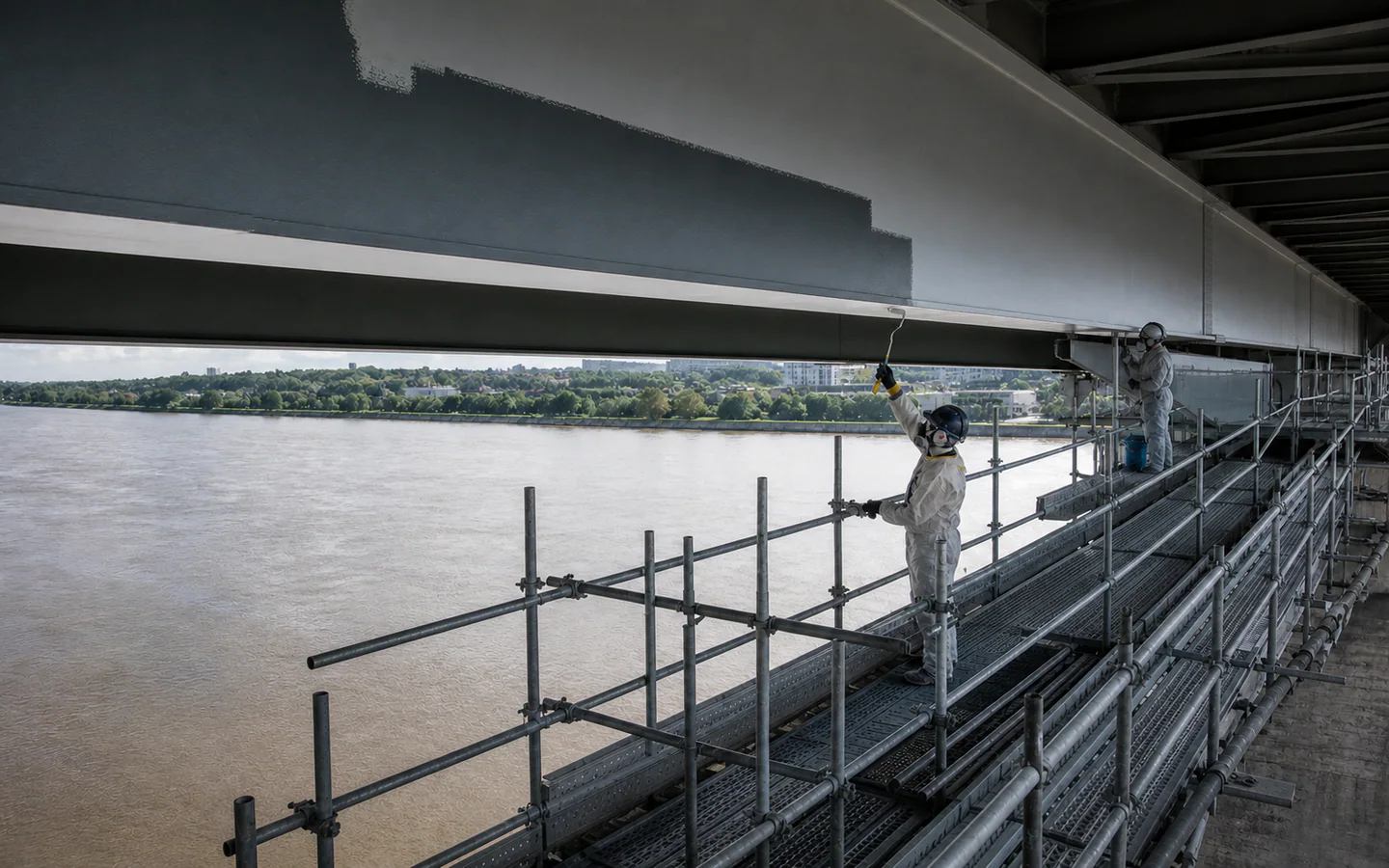
For plant, site and construction steel components, combining construction windows, outdoor weather resistance and maintenance efficiency.
Corrosion protection for hydraulic steel structures
For gates, barbers and related water or high-wet steel components, with emphasis on water pressure, long-term impregnation and maintenance windows.
Corrosion protection for wind-power equipment
For towers, cabin masks and related steel components, taking into account outdoor weather resistance, salt-spray maintenance and limited maintenance windows.
Corrosion protection for petrochemical tanks and pipelines
Placing of tissue bottom, middle and surface coatings by exposure medium, temperature, leaching conditions and design lifetime.
Status and construction confirmation
Prior to formal construction work should confirm the requirements for rust decorative grade, surface roughness, dew point, humidity, repainting interval and quality acceptance.
Corrosion, old coatings, welding, sharp edges and contaminants are recorded, with clear surface treatment levels.
Corrosion levels, water leaching, salt spray, ultraviolet, temperature and chemical media are identified.
Use on-site adhesion and appearance trials to establish the compatible system, film thickness and recoating window.
Procuring Protective Coatings: Match the Substrate and Exposure Media
Junaimei supplies polyaspartic corrosion-protection coatings and application advice. Atmospheric exposure, prolonged immersion and internal media contact require separate assessment; salt-spray or weathering data cannot be converted directly into years of service life.
Identify the Asset to Protect
Review the pipeline corrosion-protection coatings and equipment corrosion-protection coatings for product information. Identify external protection or internal media contact before specifying primers, intermediate coats and topcoats.
Verify Materials and Test Conditions
Review the Protective-Coating TDS and Safety Data Sheet to confirm surface preparation, film thickness, recoating windows and curing conditions. Chemical-resistance requirements must specify concentration, temperature and contact duration.
Prepare Project Selection Information
Describe the steel or other substrate, existing coating, corrosive environment, exposure media, operating temperature, application method and maintenance window. For prolonged immersion or specialist uses, first confirm the applicable documents and sample-validation plan.
Need help selecting a corrosion protection system?
The provision of base materials, corrosive environments, media, design life and construction conditions will assist in determining coating packages and film thickness.