
Polyaspartic polyurea pipeline corrosion protection
An aliphatic UV-resistant pipeline coating designed to resist acids, alkalis and salts. Performance depends on the selected grade and service conditions.—Weathering results depend on test conditions and the selected grade.
- Product name:
- Polyaspartic polyurea pipeline corrosion protection
- Product category:
- Anti-corrosion coatings
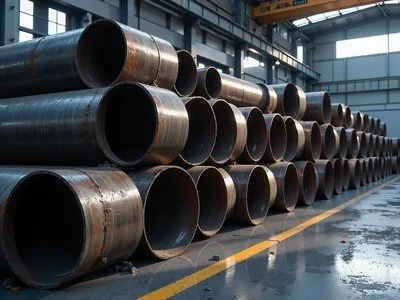
Rows of steel pipes stacked inside an industrial building
Key features
- solids content :≥95%
- UV-resistant 3000h
- Corrosion resistance
Specifications
Technical documents and conditions of use
See the technical documents below for specification sources and conditions. Verify the exact grade and document version before application. Specification sources
This document covers the relevant product series. Confirm the exact model, substrate preparation, mixing ratio, dry film thickness, temperature, humidity, curing and test conditions. Typical series values are not guaranteed values for every application.
Verify performance and service-life statements against the relevant reports, specimen preparation, test standards and service conditions. Service-life figures without supporting reports are not durability guarantees; site photographs do not replace film-thickness testing or project acceptance records.
| Parameter | Value / unit / conditions |
|---|---|
| Density | 1.1-1.2 g/cm³ |
| Touch-dry Time | ≤3 h |
| Through-dry time | ≤24 h |
| Full cure | 7 days (to final strength) |
| Tear strength | ≥50 N/mm |
| Bond strength | Steel ≥3.0 MPa |
| Water impermeability | Impermeable to water |
| Temperature resistance | -35℃~120℃ |
| Water absorption | <0.5% |
| Salt-spray resistance | ≥2000 h |
| VOC content | ≤50 g/L |
| Hazardous substances | Refer to the grade-specific SDS and hazardous-substance test report. |
| Solids content | ≥95% |
| Tensile strength | 10-25 MPa |
| Elongation at break | 300%-500% |
| Weather resistance | Refer to the applicable weathering test report and its stated test conditions. |
Features
- Evaluate weathering performance for the selected grade, color and film thickness. Confirm maintenance and protective-layer requirements for the project.—Weathering results depend on test conditions and the selected grade.
- Elongation at break exceeds 300%, accommodating thermal expansion, contraction and minor pipe deformation while bridging fine cracks at joints and surfaces. A dense three-dimensional network blocks moisture, oxygen and corrosive media to prevent rust and corrosion, accommodating deformation in steel and concrete pipes.
- Barrier performance: verify water-pressure resistance, adhesion, dry-film thickness and joint detailing for the selected coating system. Pipeline suitability depends on the substrate, medium, exposure and project acceptance tests.
- Review the grade-specific SDS, emissions data and ventilation requirements before use. Wear appropriate protective equipment. Drinking-water or food-contact applications require specific evidence and approval for the intended use.
- Select the coating according to actual mechanical loads, chemical media, concentration, temperature and exposure. Confirm suitability by testing and establish an inspection and maintenance plan.
- Appearances can be transmuted, depending on the use of pipelines and environmental needs, to integrate corrosion protection with marking, and to balance protective and recognition
Applications
Construction of drainage and fire pipes for water protection and repair; Oil and gas pipelines, chemical pipelines, heat pipelines, pipelines sealed;
Storage
This product is combustible. Store at or below 40 degrees Celsius in a cool, dry, ventilated place away from ignition sources. Shelf life: one year.
Key notes
These parameters represent typical performance ranges. Follow the product TDS/SDS, batch test report and actual service conditions. Contact us for the relevant documents, samples and application recommendations.
View more products
Our polyaspartic product range serves a variety of industries.
Return to Product Center