
polyaspartic polyurea solutionGlucose.
Two material solutions for tile grouting and decorative edge sealing, focusing on yellowing resistance, adhesion, refined appearance and a manageable application process.
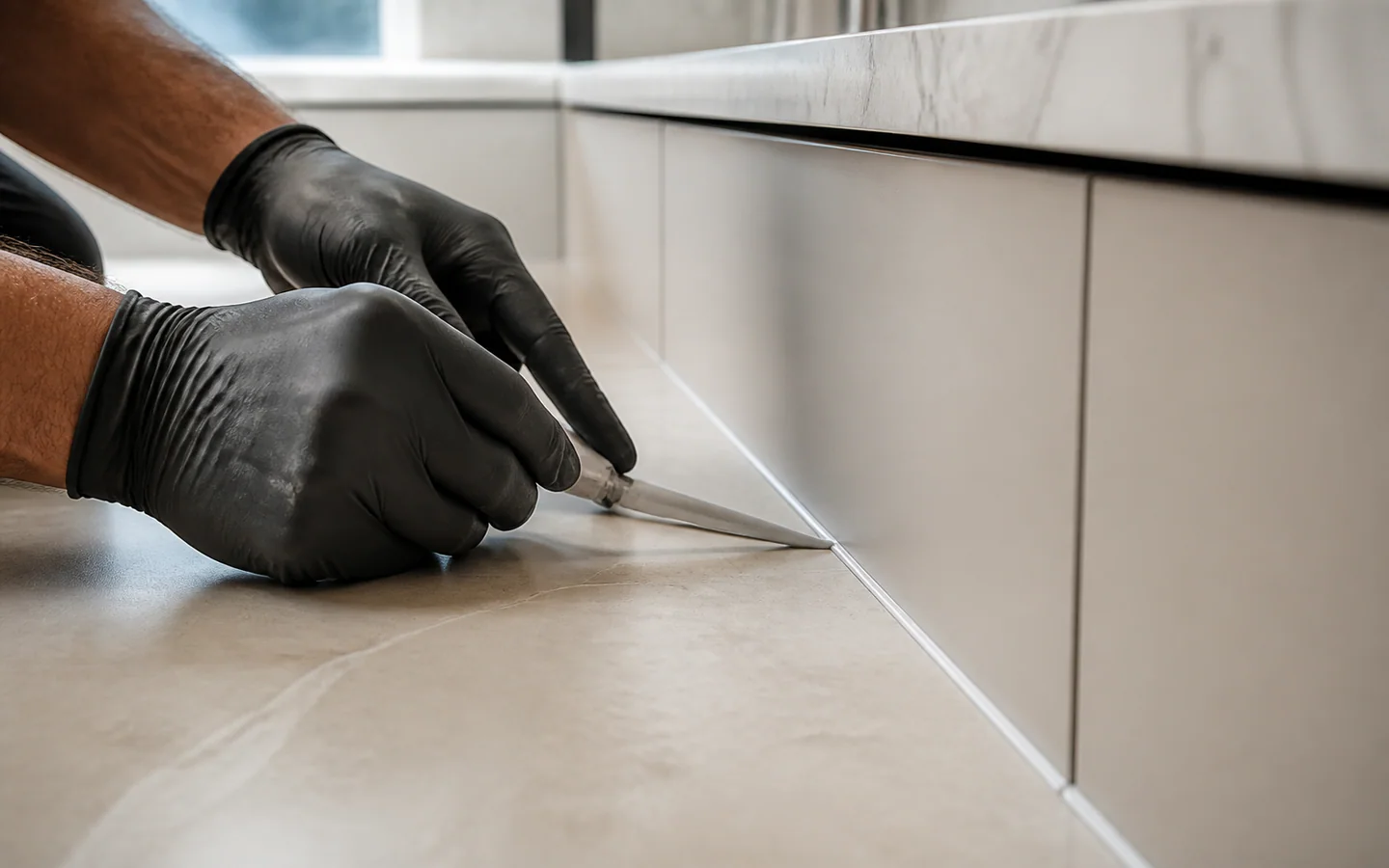
Yellowing-resistant polyaspartic polyurea tile-grout system
For tile and stone joints: clean the substrate, mix at the specified ratio, fill continuously, tool the joints and allow curing to form a smooth, stain-resistant surface.
It's for light and high decorations.
It takes a combination of soil-resilient, day-to-day cleaning and suture micro-location.
This will help to reduce construction and open-use waiting times.
- Home cook.
- In the living room.
- Commercial space
- Hotels and public buildings
Application process
- Gap cleaning and dryingRemoval of dust, oil pollution and loose residues
- Depth and edge checkConfirm the width, depth and integrity of the tile edge.
- Proportion of materials mixedAdequate mix of technical information by product
- Straight and uniform.Control usage, continuity and abundance
- Joint tooling and curingQuite clear and maintained under prescribed conditions
Yellowing-resistant polyaspartic polyurea edge-sealant system
It is used on the side of doors and windows, cabinets, surfaces, walls and bathing facilities, focusing on the compatibility of the base materials, continuous formation and decorative consistency.
Match the edge-sealant color to the surrounding finish.
(c) Combining the ability to bind and to move edges.
It is easy to create clean, continuous and clean side effects.
- Door and window and kick line.
- The cabinet and the stage.
- Wall
- Bathing facilities
- The tiles and the stones.
Application process
- Clear the sides.Elimination of dust, oil pollution and loose matter
- Attach to compatibility confirmationPrepare a small sample panel on each substrate type.
- Marginal positioning and protectionLine of control, width and adjacent protection
- It's a continuous application.Equalize the material and maintain continuous lines
- Edge finishing and curingCleaning edges and avoiding early disturbances
Pre-construction confirmation
The surface status of different tiles, stones, metals, wood and decorative plates may affect attachment and appearance.
Identification of clean methods, base material status and material compatibility.
Use a small sample panel to confirm color, gloss, edge details and cleaning methods.
Control of mixing, availability, environmental conditions and opening times by product information.
Need help selecting tile grout or an edge sealant?
Provide the substrate, joint dimensions, color, service environment and application conditions so that suitable materials and methods can be selected.