
Polyaspartic Flooring: Abrasion Resistance, Slip Resistance and Rapid Return to Service
Choose flooring systems for factories, garages and commercial spaces according to vehicle loads, cleanliness, return-to-service time and appearance.
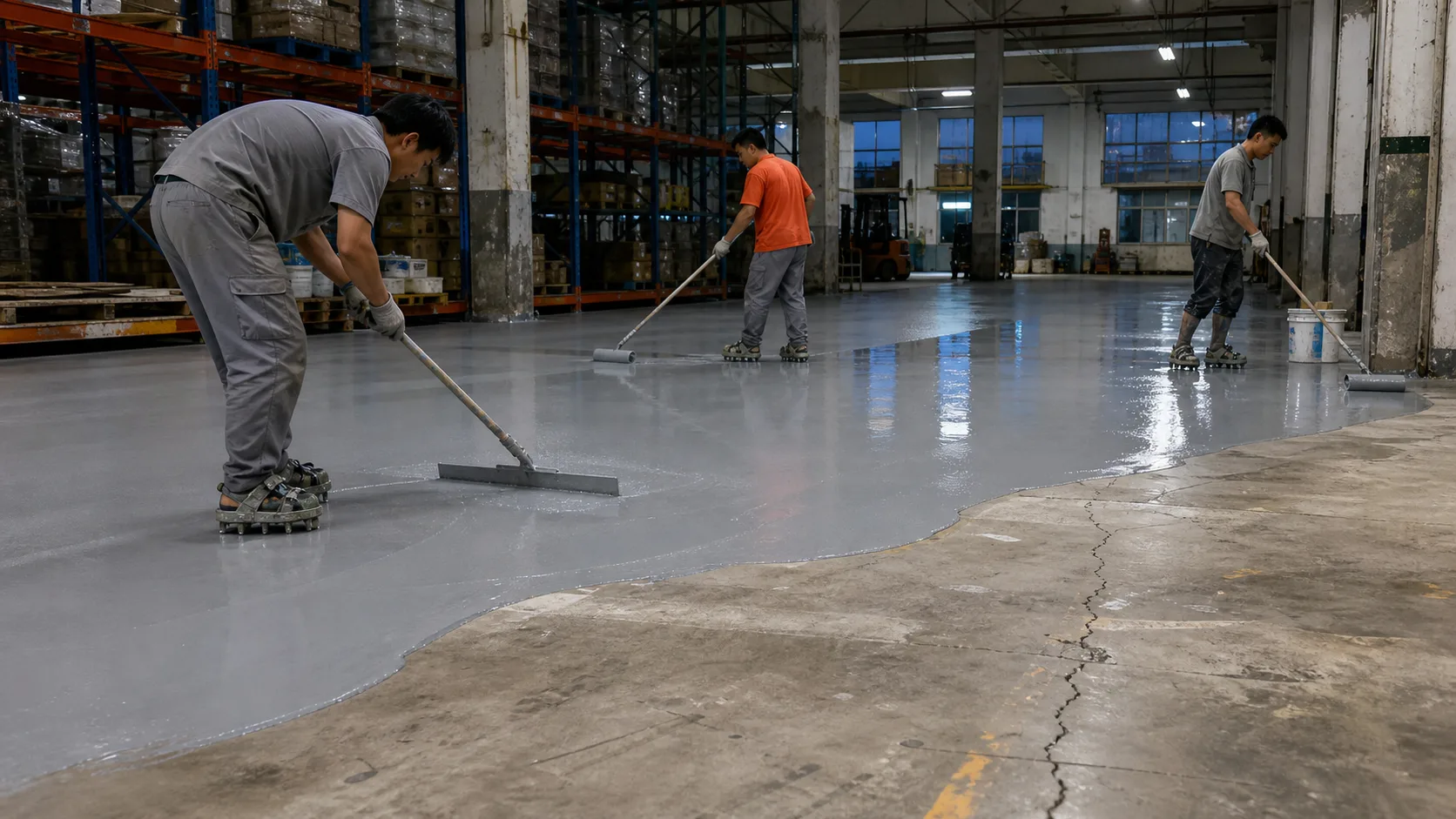
Workers spreading a gray coating over a warehouse floor
Reverse from the use of scene
Confirm vehicle types, traffic frequency, impact loads, chemical exposure, cleaning methods and allowable downtime. Ramps, turns, loading areas and ordinary corridors usually have different slip- and abrasion-resistance requirements.
Substrate preparation and leveling
Concrete must be sound, dry and free of oil and loose material. Grind or shot-blast to a uniform profile, then treat cracks, holes and movement joints according to their type.
After the primer seals the substrate, use a mortar or putty intermediate layer to level the surface and establish load support. A thin topcoat cannot conceal or correct substrate defects.
topcoat and smooth design
Choose topcoat color, gloss and texture according to lighting, traffic and cleaning needs. Aggregate size, broadcast rate and sealing method control slip resistance, while rougher textures generally require more cleaning and maintenance.
Open
Touch dry, pedestrian access, light-duty service, heavy-duty service and full cure are different stages. Determine reopening from the product TDS, site temperature and actual cure, and clearly isolate areas awaiting release.
Use of demand and sector design
Map actual traffic before selecting floor materials. Record pedestrian, trolley, forklift and heavy-vehicle frequency, tire type, turning radius, braking, impact and vibration, plus exposure to oils, acids, alkalis, cleaners and hot water. Corridors, turns, loading areas, production zones and clean areas may use different thicknesses, textures and colors within compatible systems. Show drainage slopes, movement joints, equipment bases and wall-to-floor junctions on the drawings.
A rougher finish is not always the best slip-resistant solution. Wet areas need sufficient friction, while food, pharmaceutical and precision-manufacturing areas also need easy cleaning. Choose aggregate size, coverage and sealing according to footwear or wheels, contaminants and cleaning equipment, then verify a sample panel. Traffic and warning colors must remain recognizable under the actual lighting, staining and wear conditions. High gloss can accentuate substrate waviness and application marks.
substrate, structural and construction rhythms
Assess concrete strength, age, moisture, hollow areas, cracks, oil, existing coatings and flatness. A high-performance topcoat cannot compensate for a weak or oily substrate. Vacuum thoroughly after grinding or shot blasting, repair holes and honeycombing with compatible materials, and treat structural cracks and movement joints according to movement. Identify moisture sources and use an appropriate vapor-control or moisture-tolerant system where needed.
Rapid return to service requires a planned work sequence. Set batch size, working width, overlaps and coat intervals according to temperature, area and staffing. Primers provide sealing and adhesion, intermediate layers provide leveling and load support, and topcoats provide color, abrasion resistance and weatherability. Isolate work areas from dust and other trades. Touch-dry, pedestrian access, light loads, vehicle traffic and full chemical cure are separate milestones; open the area in stages according to technical documents.
Receiving and inspection and routine maintenance
Check overall continuity of color, gloss, texture and zone markings, then inspect pinholes, bubbles, trowel marks, particles, craters and buildup. Test thickness and adhesion as agreed, with additional points in high-load areas, ramps and repair boundaries. Assess flatness against the substrate and contract requirements. Verify slip resistance under representative dry and wet conditions and after cleaning.
Use compatible cleaners and suitable cleaning tools. Remove sand, metal chips and cutting debris promptly to avoid abrasive wear. Damaged forklift wheels, oil leaks and hot spills should be controlled. For local wear, define the repair area, remove contamination, abrade and feather the edges, then restore intermediate and topcoats. Retained color codes and batch details help, but use a sample to assess color matching after aging.
Project landing and risk review
Before work begins, the project lead should review site conditions with the designer, material supplier, applicator and owner, converting drawing requirements into an actionable area checklist. Include substrate type and condition, coating layers and thicknesses, details, material batches, mixing quantities, tools, crew responsibilities, environmental controls, recoat times and return-to-service conditions. Coordinate other trades, temporary power, ventilation, fire precautions and protection of completed work so that welding, cutting, dust and equipment installation do not interfere with coating. Inspect the first completed area and compare consumption and cure with the trial area before continuing at scale.
Use inspection hold points throughout the work instead of waiting until all surfaces are covered. Inspect and retain photographs and data after substrate preparation, primer sealing, defect repair, reinforcement of critical details and before final handover. If material condition, environmental limits, batch changes or widespread defects raise concerns, isolate the area, retain samples and records, and obtain a technical assessment. Every rework record should identify the failed interface, repair area, materials and retest results. Trial areas, witnessed process checks, traceable records and verified repairs help translate laboratory performance into reliable field performance.