
How to Select Floor Coatings: Abrasion Resistance, Slip Resistance and Environmental Requirements
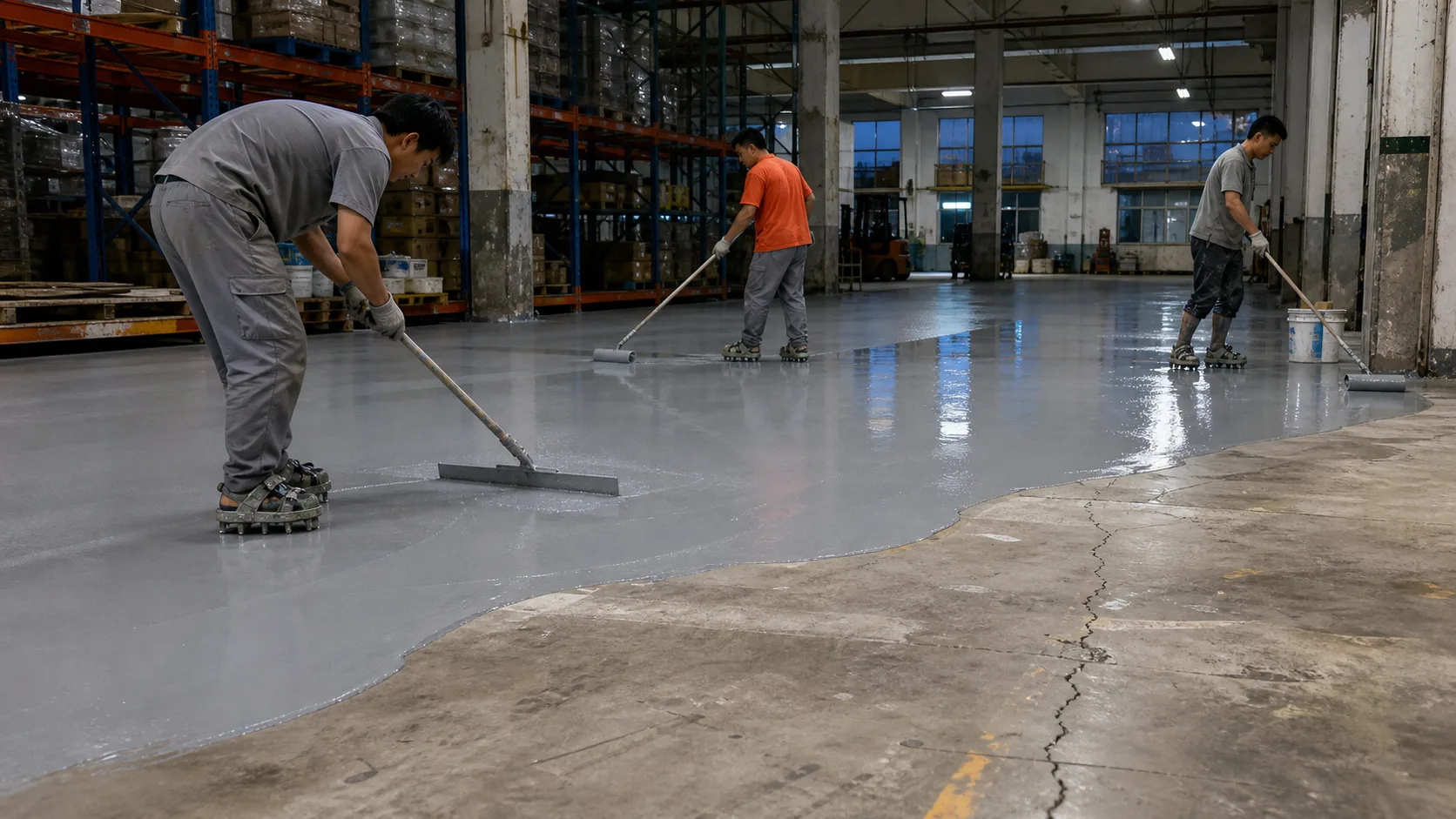
Infographic showing floor-coating selection, layer structures and factory applications
I. Preamble
flooringThe selection is a key element in ensuring the quality of ground work. The performance of the flooring paints varies from use to use, and the key indicators of the flooring paints are detailed here, providing professional selection guidance for different scenarios.
Core performance indicators
2.1
Test:GB/T 1768-2006
Test method:Taber miller, H18 wheel, 1000g load, 1000 rotation
Rating criteria:
- Precise: Excise ≤30mg
- First class: wearout 30-50mg
- Qualified: Exhausted 50-80mg
Applicable scene:High-flow areas (car park, workshop, warehouse) require merit; General area (offices, exhibition halls) above first level
2.2 Smoothness
Test:DIN 51130 (German Standard)
Rating criteria:
- R9: Lightly smooth, applicable to dry areas
- R10: Moderately smooth, applicable to light humid areas
- R11: Good smooth, suitable for wet zone
- R12: highly smooth, suitable for oil-contaminated humid areas
- R13: Extremely smooth, for extremely wet areas
Applicable scene:Food workshop, kitchen, pool perimeter requirements above R11; Garage ramp requirements R12
2.3 Environmental performance
VOC content:GB 38508-2020 Regulation, flooring coating VOC≤50g/L
Off-TDI:≤0.1%
Heavy metal content:Lead, cadmium, chrome, mercury ≤600ppm
Accreditation standards:China Environmental Marker (Ten Ring Certification), France A+ Certification, United States GREENGUARD Certification
2.4 adhesion
Test:GB/T 5210-2006 / ISO 4624
Rating criteria:
- Excellence: ≥10MPa (steel base), ≥2.0MPa (concrete base)
- First class: ≥8MPa (steel base), ≥1.5MPa (concrete base)
- Qualified: ≥5MPa (steel base), ≥1.0MPa (concrete base)
2.5 Resisting Chemical
Test method:Chemical medium impregnated 90 days
Test media:10% H₂SO₄、 10% NaOH、 10% Nacl, petrol, oil.
Rating criteria:No bubbles, no color change, no softening, no stripping.
III. Recommendations for different scenarios
3.1 New energy plant
Use characteristics:Forklifts are frequent, clean and possibly chemical leaks
Recommended products:Polyaspartic Floor Coating
Performance requires:
- Grindability: ≤30mg (excellent)
- adhesion :≥2.0MPa
- Chemical resistance: alkalis, electrolytes
- Environmental: VOC≤50g/L, ten-ring authentication
- thickness: ≥2mm
3.2 Food Medicine Workshop
Use characteristics:Cleanliness, frequent cleaning, possible water stains
Recommended products:polyaspartic polyurea cleaning paint
Performance requires:
- Smoothness: R11+
- Environmental and contact-use requirements: review the grade-specific SDS, emissions data and applicable test reports. Food-contact use requires specific supporting evidence.
- Chemical resistance: detergents, disinfectants
- Antibacteriality: inhibiting bacteria
- thickness: ≥3mm
3.3 Commercial parking area
Use characteristics:Car traffic, oil, beauty.
Recommended products:polyaspartic parking paint
Performance requires:
- Grindability: ≤30mg (excellent)
- Smoothness: R10 (Zephyr), R12 (spread)
- Oil-resilient: petrol-resisting, oil-impregnated
- Decorative options: a wide range of colors and line marking
- thickness: ≥2mm
3.4 Logistics Warehouse
Use characteristics:Forklift frequency, cargo heavy, dusty
Recommended products:Abrasion-Resistant Polyaspartic Floor Coating
Performance requires:
- Grindability: ≤25mg (excellent)
- Pressure resistance: ≥80MPa
- adhesion :≥2.5MPa
- thickness: ≥3mm
3.5 Office / Gallery
Use characteristics:The flow of people is moderate, the beauty is demanding.
Recommended products:polyaspartic polyurea decorating paint
Performance requires:
- Grindability: ≤50mg (First Class)
- Decorative options: a wide range of colors and custom patterns
- Environmental: VOC≤30g/L, French A+ authentication
- thickness: ≥1.5mm
Construction process requirements
4.1 substrate Process
- Concrete strength: ≥C25
- Water content: ≤8%
- Flatness: 2m rectangular check, gap ≤3mm
- Cleanness: no oil, no ash, no loose matter
4.2 coating structure
- Primer: containment, enhancement
- Medium coating: seek to increase height and intensity
- Mask: Decoration protection, providing final performance
4.3 Conservation Requirements
- Touch-dry time: ≤2 hours
- Hard-dry time: ≤24 hours
- Total curing: 7 days
- During maintenance: no taps, water showers
Quality acceptance standards
- Appearance: smooth, smooth, bubble-free, fissure-free
- Thickness: meeting design requirements, allowing deviation ≤10%
- adhesion: stylist 0-1, or pull ≥1.5MPa
- Hardness: Shore D≥50
- Smoothness: Design requirements (R9 - R13)
Concluding remarks
Select the coating system according to the actual substrate, exposure, application conditions and acceptance criteria. Junaimei provides product information and technical support to help evaluate suitable options.
Selection guide
Select abrasion-resistant polyaspartic flooring according to traffic, substrate condition, slip resistance, stain resistance and maintenance needs. Compare abrasion data only after checking the test method, specimen construction and coating system.
It's not the only indicator.
Abrasion-resistant polyaspartic flooring must also meet requirements for substrate adhesion, slip resistance, stain resistance, cleaning and repair. Results from different abrasion tests and loads cannot be converted directly. Define the traffic conditions and use a system sample panel to confirm the finish and suitability for lanes, factories or outdoor flooring.
See you at the product entrance.Floor coatings。