
Polyaspartic Supplier Selection: A Procurement Checklist
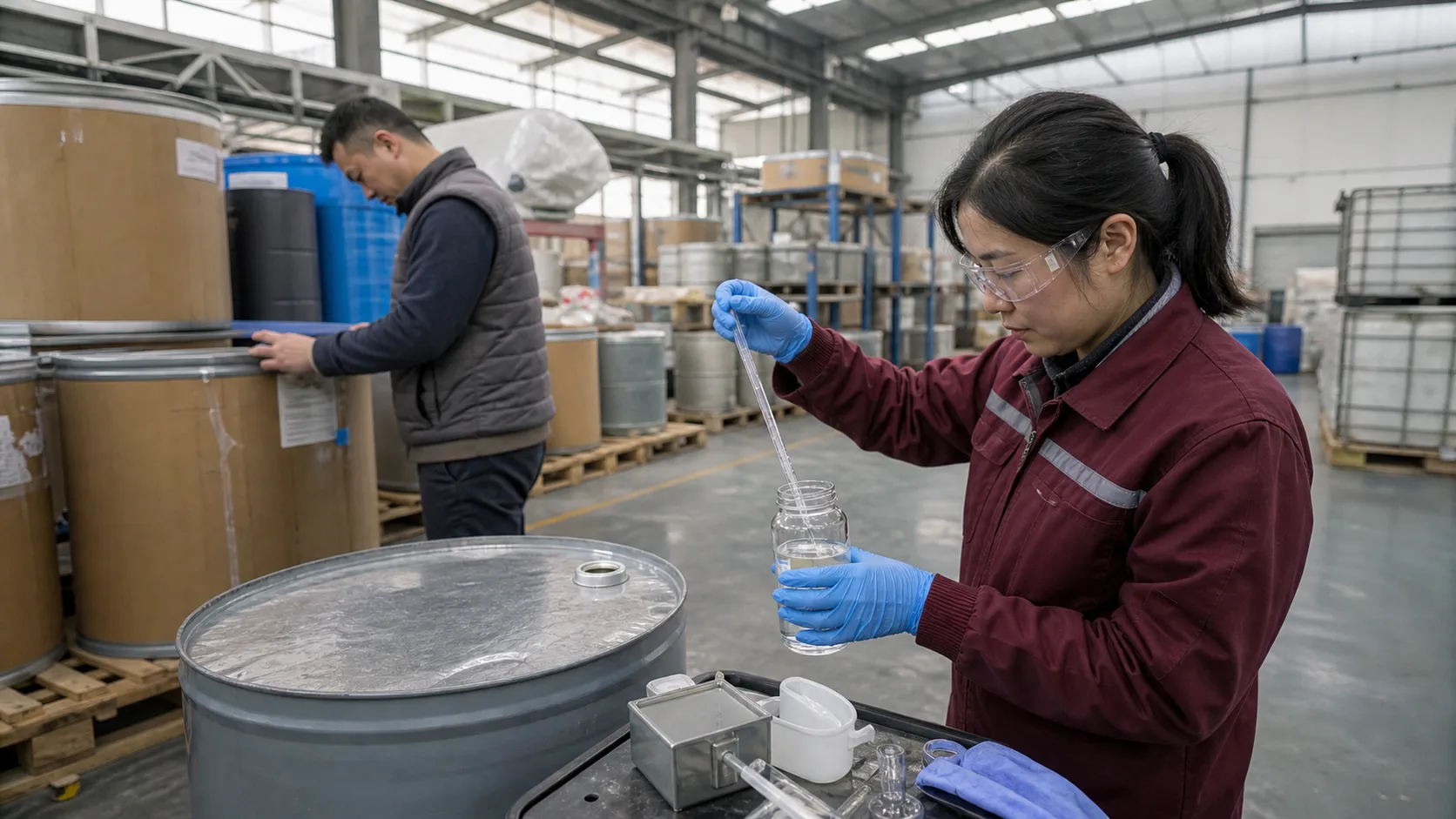
Material sampling and quality-record illustration.
I. Define the application before choosing a supplier
Polyaspartic coatings offer formulation options for different working times, hardness, flexibility and exposure. Compare complete systems against the actual project requirements.
- weather resistance :Review weathering reports with defined exposure conditions. Accelerated test hours do not establish a fixed number of outdoor service years.
- Construction window:Confirm application temperature, humidity, dew-point margin, working time and cure conditions for the selected grade.
- Material composition:Review grade-specific VOC and emissions data—Check the applicable product standard and SDS. Low odor alone does not demonstrate safety or suitability for an enclosed space.
II. Five supplier checks
Assess product identity, documents, manufacturing traceability, relevant project records and agreed service scope.
- Resin trace:Confirm the exact resin and hardener grades, specifications and batch traceability. Solids content alone is not a universal quality threshold.
- Test qualification:Check report authenticity, sample identity, test method, date and laboratory scope. Accreditation and testing are distinct from product certification.
- Technical capability:Ask for evidence relevant to the proposed formulation and application. Patent count alone does not establish suitability or performance.
- Application information:Review relevant application procedures and acceptance records, with customer information shared only when authorized.
- Service systems:Clarify material supply, system compatibility, application guidance and after-sales responsibilities in writing.
III. Compare suppliers on consistent evidence
Use the same specification and supply scope for every candidate. This article does not provide a supplier ranking or unverified competitor comparison.
- Product documents:Request current TDS/SDS documents and applicable batch or type-test reports for the proposed grade.
- Application evidence:Review comparable substrates, service conditions, film thickness and inspection records.
- Commercial terms:Compare delivery, packaging, technical support and warranty conditions without relying on unnamed competitor claims.
IV. Information to confirm with Junaimei
Contact Junaimei for grade-specific product documents and a quotation matched to the project. Confirm the following before ordering.
- Product and formulation:Agree the grade, compatible hardener, mixing ratio and required performance. Verify special approvals against current documents.
- Quality records:Request applicable batch inspection and traceability records. Check any laboratory or certification claim against the issuing body and its stated scope.
- Packing and delivery:Confirm stock, lead time and customization feasibility in the quotation. Functional requirements need their own test and acceptance criteria.
- Service responsibilities:Agree technical-support scope, response arrangements and relevant project evidence without assuming a universal response time or repurchase rate.
V. Three procurement steps
- Product parameters:Request solids content, mixing ratio, application time, curing information and handling instructions.
- Product documents:Request the original applicable reports, weathering test conditions and relevant project records. Verify authenticity with the issuing laboratory or authority.
- Agree the complete system:Discuss compatible primers, intermediate layers and topcoats, along with the application support included in the quotation.
6. Common questions
How does polyaspartic differ from other polyurea coatings?
A: Polyaspartic systems use amine-functional resins with compatible isocyanate hardeners. Working time and weathering behavior depend on chemistry and formulation; compare the actual products and test conditions.
Q: Which applications should be discussed with the supplier?
A: Provide the substrate, exposure, loads, appearance, application method and opening-time requirements. Specialist uses require separate evidence.
What should I ask a supplier before ordering?
A: Check company registration, manufacturing information, product traceability and report authenticity. A business registration or laboratory accreditation alone is not proof of every product claim.
7. Request a sample or quotation
Choose according to documented suitability—compare the specified system, application procedure, acceptance criteria and commercial terms. No industry ranking or guaranteed project outcome is asserted here.
Selection guide
A practical checklist covering product documents, traceability, application evidence, delivery and technical-service responsibilities.