
Primer Selection & Intercoat Adhesion
The roles of primers on concrete, metal and existing coatings, with guidance on recoat windows and adhesion verification.
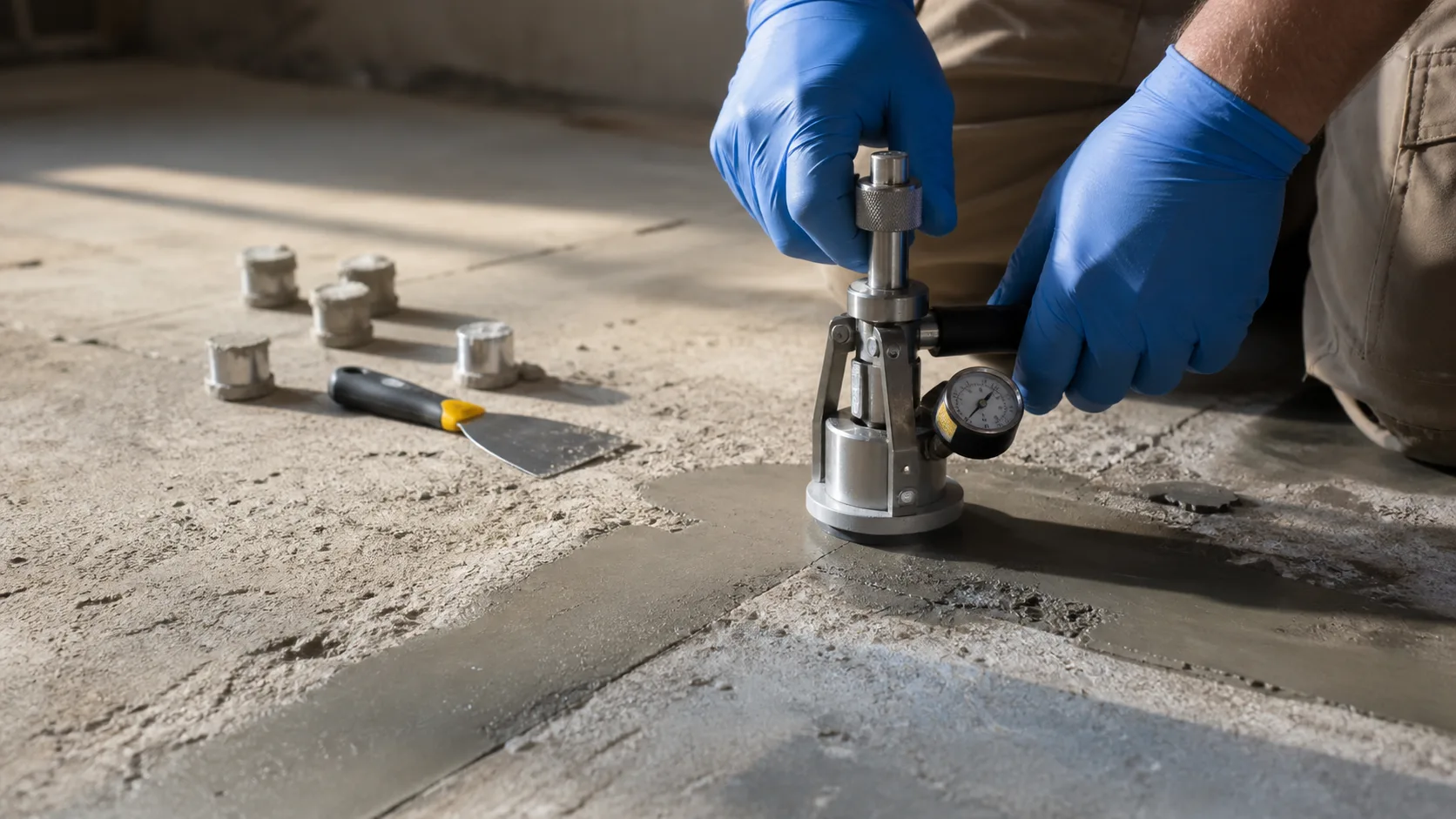
Gloved hands operating a pull-off tester on a concrete surface
What's the problem, Primer?
Primers seal porous substrates, improve wetting and adhesion, reduce outgassing and provide required corrosion protection or interface bonding on metals. Thicker is not always better: pooled primer may impair curing and intercoat adhesion.
Different basis judgements
For concrete, assess strength, moisture and porosity; for metals, rust removal, surface profile and cleanliness; for existing coatings, adhesion, compatibility and contamination. Where conditions are uncertain, test the proposed system on a small area first.
recoat window
Apply the next coat after the primer reaches the specified condition and while the recoat window remains open. After that window, clean, abrade or use the specified interface treatment according to the TDS.
Attach Authentication
Use the same substrate preparation, mixing and curing conditions as the main project. Record failure location as well as strength: substrate cohesive failure, interface failure and intercoat failure indicate different issues.
Base Recognition Matches Primer
A primer must establish a reliable interface, but the mechanism depends on the substrate. Concrete requires pore sealing, capillary wetting and reduced outgassing. Carbon steel requires corrosion protection and adhesion on a specified cleanliness and profile. Dense surfaces such as galvanized steel, stainless steel, aluminum and tile rely more on cleaning, abrasion and suitable interface chemistry. Before repairing an old coating, check whether it is sound, chalking or contaminated with wax or silicone, and use a trial to assess swelling and intercoat bonding. Selecting only by a universal-primer label is risky.
Inspect after grinding and cleaning. For concrete, check strength, moisture and moisture return; for metal, oil, salts, flash rust and profile; for existing coatings, adhesion and compatibility. Primer consumption varies with porosity. Aim for uniform wetting and continuous sealing without buildup, using two thin coats where needed. Rapid local absorption may indicate pores or repair materials requiring separate treatment.
recoat window and interface management
The recoat window is the period in which the next layer can bond reliably to the previous one. Recoating too early may trap solvent, air or incompletely reacted components; recoating too late may lose chemical bonding because of full cure, contamination or reduced surface energy. Record application times by area using the technical data and actual temperature. For large areas, use zone labels or electronic records so crews do not interpret touch dry as permission to recoat at any time.
After the recoat window expires, remove contamination, abrade to a uniform profile and vacuum thoroughly; some systems also need a bonding treatment. Sweat, dust, condensation, release agents and cleaner residues weaken intercoat adhesion. Recheck after rain or washing. Avoid isolated scratches or unprimed areas where abrasion exposes the substrate, and use hand tools for edges, holes and inaccessible areas.
With test and abnormal treatment.
A test area should reproduce the project's preparation, material batches, ratio, tools, thickness and curing conditions. In pull-off testing, record strength and whether failure occurs in the adhesive, substrate, primer interface or between coats. Cross-cut testing is useful for some thin films and metal substrates but does not replace every pull-off assessment. Include normal and higher-risk areas rather than selecting only ideal surfaces. Repair test locations through the full coating system and mark them in the records.
If delamination occurs, locate the failed interface before investigating moisture, contamination, preparation, ratio, recoat window and cure. Continuing to overcoat without identifying the cause expands the rework. Remove failed material to sound boundaries, feather the old film, clean and reinstate a compatible primer and subsequent layers. For systematic problems, suspend large-area work, review batches and methods, and prepare a new trial area. Clear stop-work and restart criteria are essential to quality control.
Project landing and risk review
Before work begins, the project lead should review site conditions with the designer, material supplier, applicator and owner, converting drawing requirements into an actionable area checklist. Include substrate type and condition, coating layers and thicknesses, details, material batches, mixing quantities, tools, crew responsibilities, environmental controls, recoat times and return-to-service conditions. Coordinate other trades, temporary power, ventilation, fire precautions and protection of completed work so that welding, cutting, dust and equipment installation do not interfere with coating. Inspect the first completed area and compare consumption and cure with the trial area before continuing at scale.
Use inspection hold points throughout the work instead of waiting until all surfaces are covered. Inspect and retain photographs and data after substrate preparation, primer sealing, defect repair, reinforcement of critical details and before final handover. If material condition, environmental limits, batch changes or widespread defects raise concerns, isolate the area, retain samples and records, and obtain a technical assessment. Every rework record should identify the failed interface, repair area, materials and retest results. Trial areas, witnessed process checks, traceable records and verified repairs help translate laboratory performance into reliable field performance.