
Formulation Compatibility: Pigments, Solvents & Additives
Review compatibility issues in high-solids polyaspartic formulations, focusing on wetting and dispersion, moisture control, defoaming, leveling and storage stability.
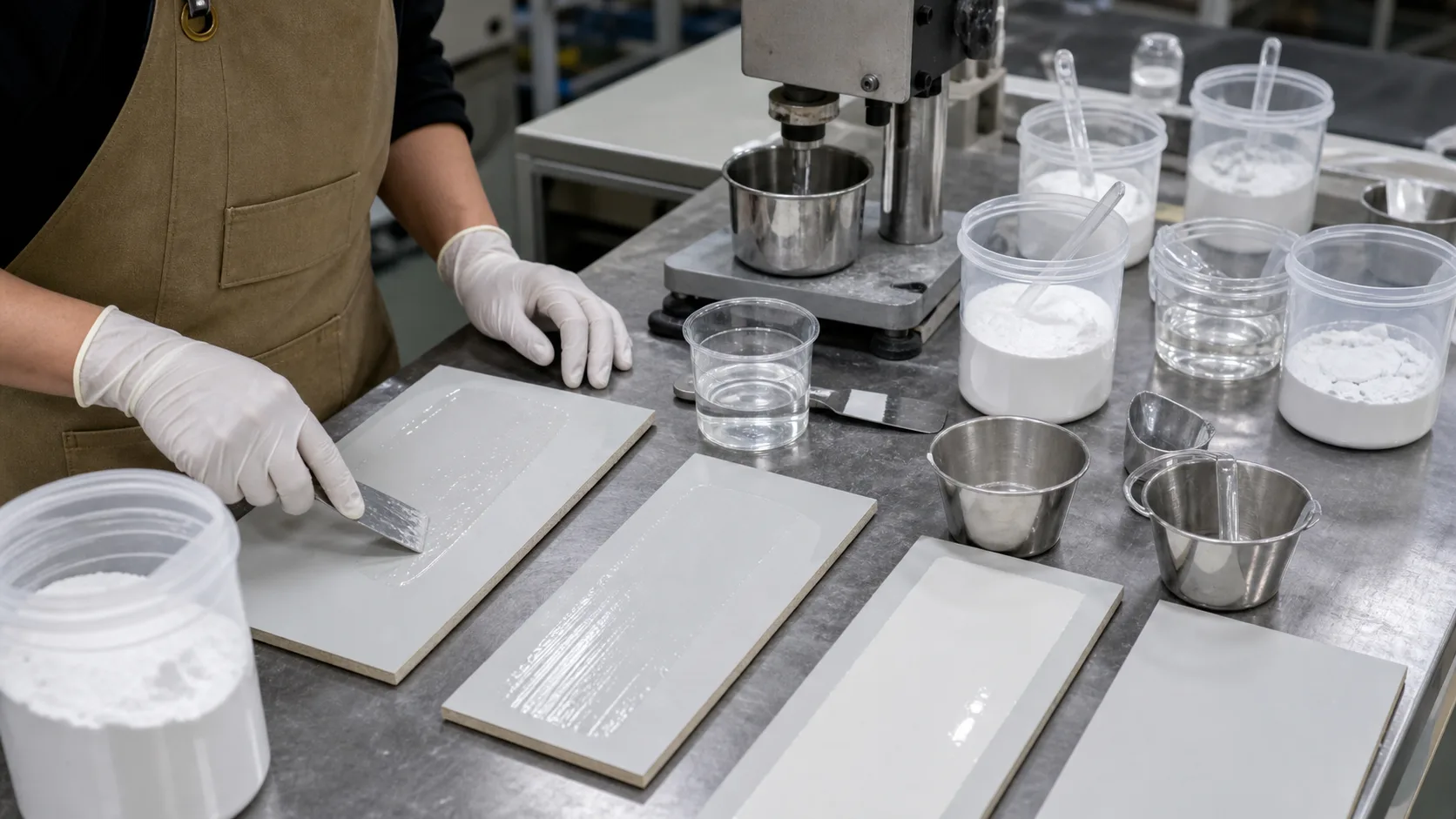
Pigment, filler and resin mixtures displayed with coated test panels
pigment selection and moisture control
Pigment and filler oil absorption, particle size, surface treatment and moisture affect viscosity, hiding, settling and bubbles. Highly absorbent or porous powders can significantly shorten working time, while introduced moisture can react with isocyanates and release carbon dioxide.
Store raw materials sealed and dry; dry them where necessary or select low-moisture grades. Also control the production environment, recovered dust and cleaning residues.
The sequence of wet and dispersed tests
First establish a stable pigment paste using the resin and selected dispersant. Check fineness, viscosity, reflocculation and storage changes before adding other ingredients gradually. Adding all additives at once makes it difficult to identify the cause of a problem.
Control dispersion intensity and temperature rise. Excessive shear may entrain air or accelerate certain reactions. During scale-up, reconfirm performance according to equipment tip speed and energy input.
Solvent & Dilution Policy
Choose compatible, low-moisture solvents that meet applicable requirements. Solvents affect application viscosity, evaporation profile, leveling, flash point and VOC content. An unsuitable balance of fast and slow solvents can cause pinholes, orange peel, lifting or retained solvent.
Arbitrary thinning on site changes designed solids content, film thickness and reaction proportions. Any permitted thinning range must be stated in the product technical data.
Flowing, Lovening and Touching
Defoamers must address mixing foam, application bubbles and microbubble release. Excessive dosage or poor compatibility may cause craters and intercoat problems. Leveling agents affect surface tension and recoating; thixotropic additives require a balance between sag resistance and workability.
Screen additives on the target substrate, at the target thickness and with the intended tools, assessing both initial and aged performance. A drawdown on glass alone does not cover site risks.
Storage and packaging certification
After formulation, test storage at ambient, high and cyclic low temperatures, checking viscosity, settling, skin formation, color change, fineness and reactivity. Container linings, seals and desiccants can also affect stability.
Opening a container introduces air and moisture. Complete decanting and sampling promptly and reseal immediately. Contaminated or out-of-shelf-life materials require retesting before use.