
Controlling pot life, gelation and curing rate in a coating system
How temperature, batch size, resin structure, hardener and catalysts jointly affect working time, and how to relate laboratory cup tests to field application.
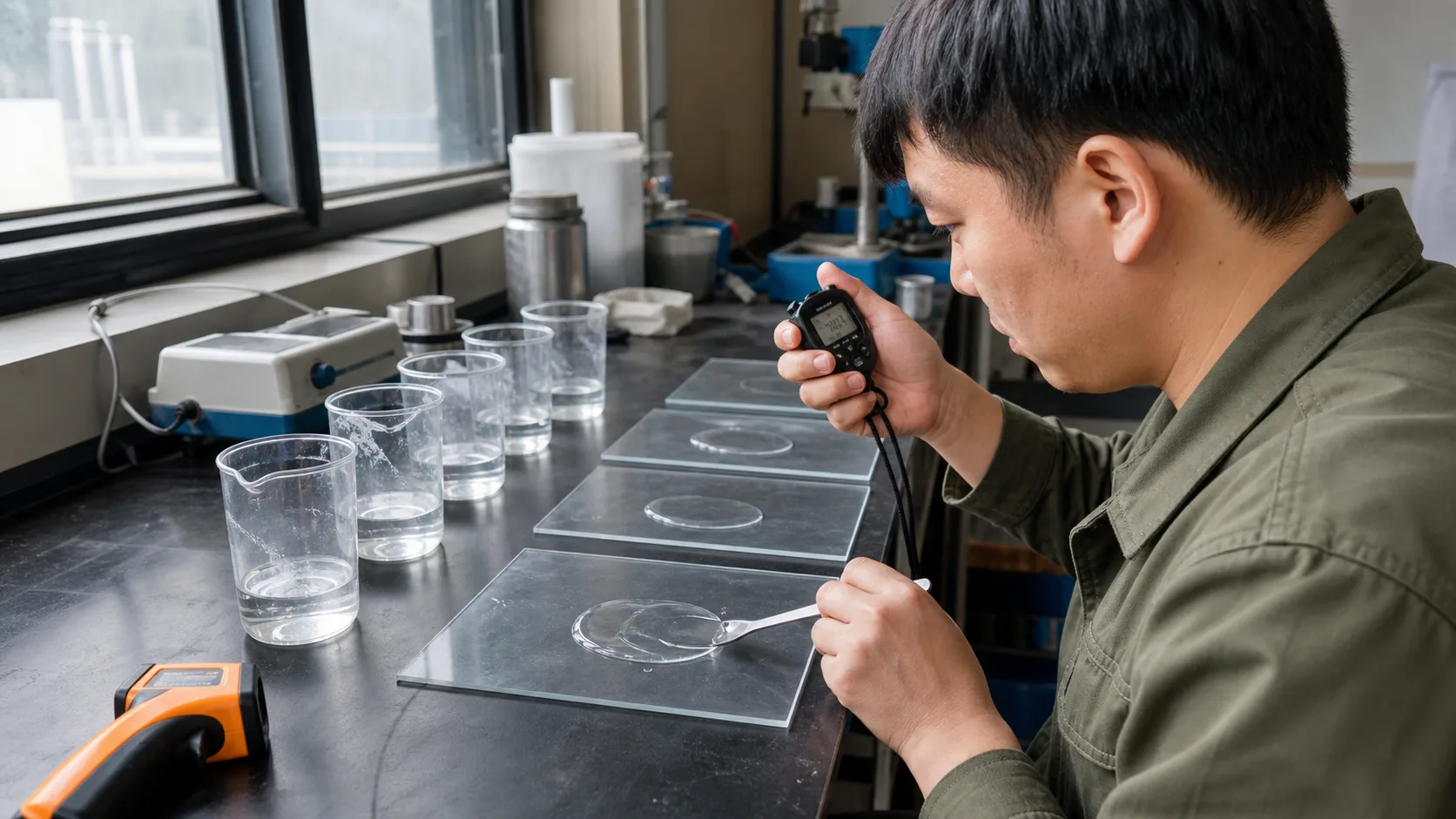
A technician using a timer to observe changes in resin sample flow
Harmonization of time definitions first
Pot life generally describes the time after mixing during which the material meets specified viscosity or handling requirements. Gel time marks substantial loss of flow; touch dry, through dry, pedestrian readiness and full cure are separate stages. Technical discussions must identify the definition and assessment method being used.
A claim of 40 minutes of working time without temperature, mix quantity, container geometry and an endpoint is of limited use on site. Record both viscosity over time and actual rolling behavior.
Temperature and volume effects
Reaction generally accelerates as temperature rises. Material, air and substrate temperatures all matter; sun-heated floors or material in metal containers can be much hotter than the air. Low temperatures may extend pot life but can also slow early cure and increase sagging or contamination risks.
Mixed material concentrated in a container continues to generate heat. Larger batches and deeper containers tend to heat faster. Mix smaller quantities more frequently and spread them promptly; do not directly extrapolate a laboratory cup result to a full bucket.
Order of formulation adjustments
Establish the basic reaction window through resin combinations and hardener type, then fine-tune solvents, additives and catalytic factors. Forcing a large speed change through inhibition or catalysis may affect storage stability, water resistance, intercoat adhesion or appearance.
Keep other variables constant during each adjustment and track pot life, touch-dry time, hardness development, bubbles, leveling and final mechanical properties together, rather than optimizing one time value alone.
How to manage windows on site
Before work, prepare a small mix at the day's material temperature to confirm mixing and usable working time. Label each container with its start time and application area. Stop using material beyond its window or when pronounced thickening, stringing or lumps appear. Do not add fresh material or solvent to restore flow.
Match mixing output to the crew's spreading capacity. Plan stripe coating, roller changes and handovers in advance. Divide large floors into zones with defined finishing edges to reduce lap marks caused by material exceeding its working window.
Generate temperature curves with data
During development, establish pot-life and cure curves at representative temperatures such as 5, 15, 25 and 35 degrees Celsius, distinguishing thin and thick films. Combine these with cup tests at different mix quantities to produce a practical site application table.
Final values must follow the specific product TDS and validation results. Reconfirm the curves after changes to resin, hardener or key additives.