
Resin Storage, Incoming Inspection & Troubleshooting
Manage receipt, retained samples, storage and production use as one traceable process, with a defined sequence for investigating thickening, haze, crystallization, color change and abnormal reactivity.
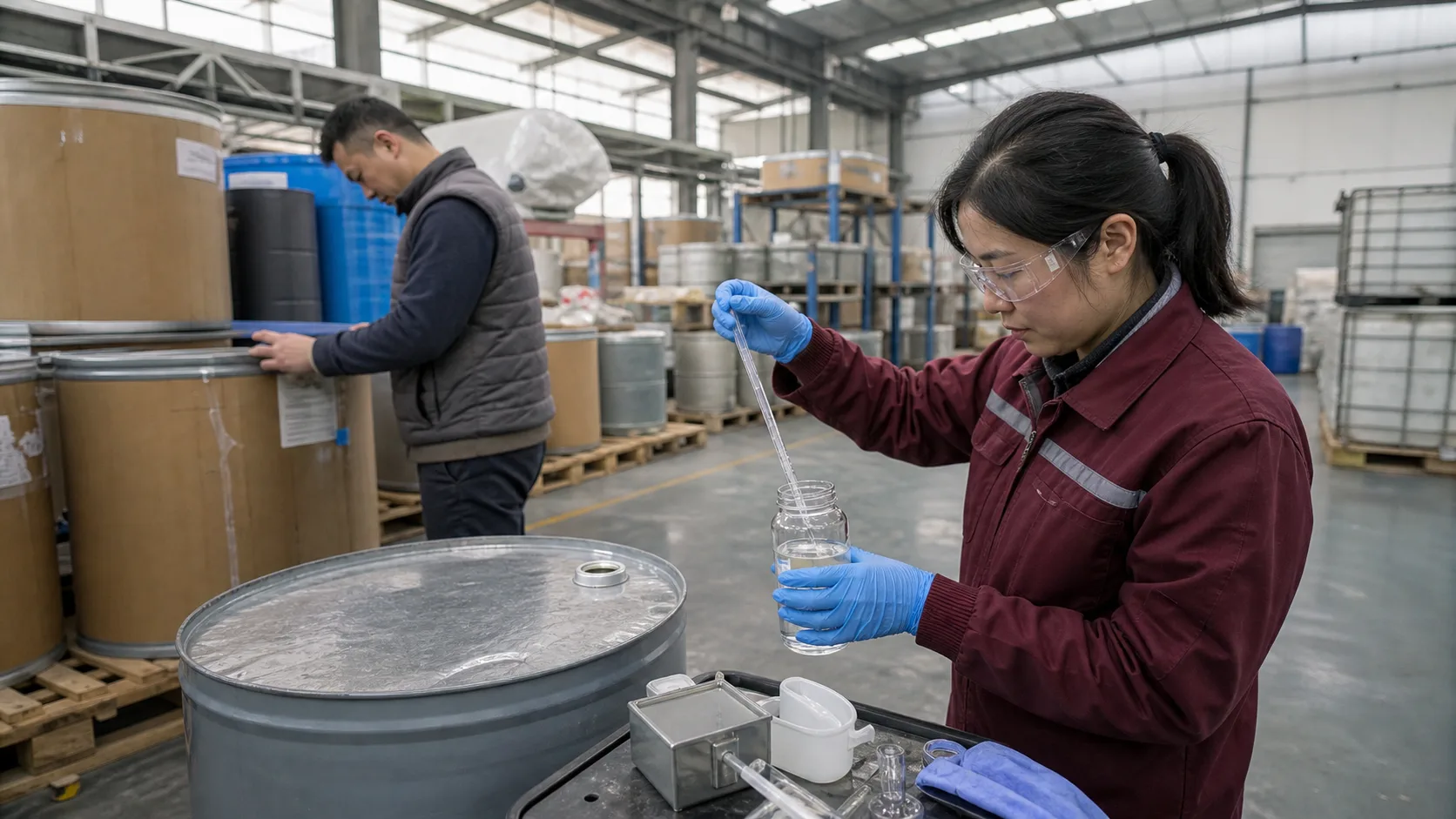
Staff sampling material from drums and checking records in a storage area
Receipt and identification
Verify supplier, grade, batch, production date, net weight and accompanying documents. Check seals, swelling, leakage and transport damage. Sample with clean, dry tools and avoid cross-contamination between batches.
Incoming inspection should cover appearance, viscosity, solids content, color, density and the agreed amine equivalent weight, with representative sealed samples retained.
Management of storage conditions
Store resin sealed in a cool, dry, ventilated place away from ignition sources. Follow the supplier's SDS, TDS and label for temperature and shelf life. Avoid prolonged sun exposure, freezing and repeated temperature cycling.
Use first-in, first-out stock control and track batch locations. Mark opened containers with the opening date, remaining quantity and responsible person. Minimize headspace in small residual quantities and seal securely.
Common appearance abnormal.
Thickening may result from low temperature, evaporation, oxidation, contamination or aging. Evaluate haze and crystallization against temperature and composition. Isolate material showing marked separation, flocculation, unusual odor or sudden color change.
Do not directly heat or dilute material to address an unexplained abnormality. Check the technical data and compare retained samples, other containers from the batch and laboratory results; contact the supplier when needed.
Reaction abnormality check.
If pot life suddenly shortens, check material temperature, mix quantity, ratio, catalytic contamination, moisture and raw-material batch in sequence. For prolonged failure to cure, check omitted components, wrong ratios, poor mixing, low temperature and excessive nonreactive dilution.
For bubbles, investigate substrate and powder moisture, entrained mixing air, thick-film exotherm and solvent release together. Do not attribute every problem to the resin alone.
Create a closed ring record.
Link every product batch to raw-material batches, production parameters, test results, retained samples and customer feedback. Trace abnormalities by time, equipment, personnel and raw materials, then confirm the cause and implement corrective and preventive measures.
Consistent quality control requires purchasing, storage, development, production and application data to cross-check one another, rather than simply adding another test.