
Industrial paint solution: equipment, steel structure and chemical engineering landscape
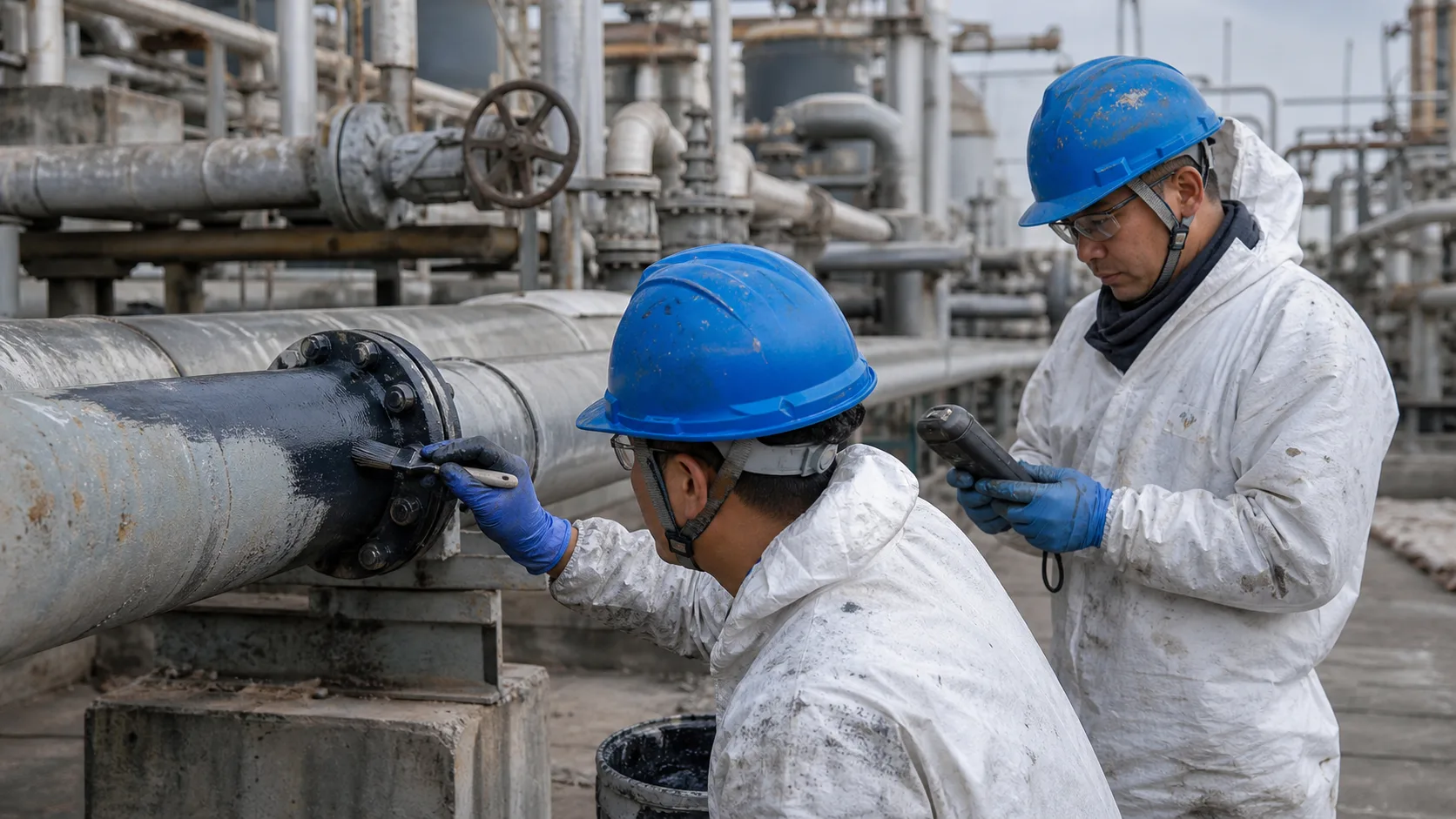
Infographic showing corrosion protection for equipment, steel structures and chemical facilities
I. Preamble
Industrial corrosion can severely affect equipment service life and production safety. Polyaspartic coatingsAnti-corrosion coatingsWith its chemical resistance and fast curing, it has become a preferred option for industrial corrosion protection. This article presents corrosion-protection solutions for equipment, steel structures and chemical-processing environments.
II. Types of corrosion and protection mechanisms
Common corrosion type for 2.1
- Chemical corrosive: chemical medium erosion such as acid, alkalis, salt, etc.
- Electro-chemical corrosive: exposure of metals to electrolyte solutions produces electrochemical reactions
- Physical corrosion: mechanical effects such as wear, brush, shock
- Biocorrosion: Corrosion from microbial metabolites
2.2 polyaspartic protective equipment
- Blocking: Cyclical coating to prevent corrosion media infiltration
- Gravity: The slowness agent in the coating inhibits corrosive reaction
- cathode protection: electrochemical protection in conjunction with zinc-rich paint
- Flexibility: evaluate limited substrate movement and treat cracks and joints separately.
Equipment solution
3.1 storage tank
Corrosion environment:The inner wall is exposed to chemical media and the outer wall is corrosive to the atmosphere.
Recommended options:
- Internal lining: polyaspartic tank coating, dry film thickness ≥500 μm
- Outer wall: polyaspartic polyspartic polyspartia coorrosion coating + polyurethane topcoat, dry film thickness ≥200μm
Performance indicators:salt-spray resistance ≥6000 hour, acid-resistant alkali impregnated 90 day-by-day
3.2 Pipe
Corrosion environment:Burial pipes are corroded by soil and empty pipes by the atmosphere
Recommended options:
- Buried pipelines: zinc-rich epoxy primer + polyaspartic polyurea intermediate coat + polyethylene corrosion protection layer
- Empty pipe: polyaspartic polyurea corrosion paint, dry film thickness ≥300μm
Performance indicators:≤8mm detached from the cathode, soil stress fractured
3.3 Reaction
Corrosion environment:High temperature, high pressure, strong corrosive medium
Recommended options:Polyaspartic equipment coating, dry film thickness ≥800 μm
Performance indicators:Temperature variation from -40 to 120 degrees Celsius; no abnormalities after 180 days of acid and alkali immersion
Steel structures
4.1 Bridge Steel Structure
Corrosion environment:Atmospheric corrosion, ultraviolet radiation, temperature change
Recommended options:
- Bottom paint: epoxy-rich zinc-filled paint, dry film thickness 60-80μm
- Intermediate paint: polyaspartic polyurea corrosion paint, dry film thickness 150-200μm
- Topcoat: aliphatic polyurethane, dry film thickness 50–80 μm
Design life:More than 20
4.2 Sea Platform Steel Structure
Corrosion environment:High salt spray, waves, ultraviolet radiation.
Recommended options:Polyaspartic marine coating, dry film thickness ≥400 μm
Performance indicators:salt-spray resistance ≥8000 hour, seawater impregnation 365 no anomaly
Steel structure of 4.3 plant
Corrosion environment:Industrial atmosphere, chemical gases
Recommended options:Polyaspartic polyureaflooring Polyaspartic painting, dry film thickness ≥200μm
Design life:More than 15
V. Chemical project solution
5.1 Chemical workshop ground
Corrosion environment:Algebra shills, chemical leaks, mechanical wear
Recommended options:Polyaspartic equipment coating, dry film thickness ≥2 mm
Performance indicators:Acid and alkali immersion resistance: 180 days; abrasion loss: ≤30 mg
5.2 Sewage treatment pool
Corrosion environment:Wastewater immersion, microbial corrosion and H₂S gas
Recommended options:polyaspartic polyurea device ≥1.5mm
Performance indicators:Resists wastewater immersion for 365 days and H₂S corrosion
5.3 Chemical storage tank area
Corrosion environment:Chemical media leakage, atmospheric erosion
Recommended options:Polyaspartic polyurea tank
Performance indicators:Chemical-resistant medium impregnated, fire-resistant level A
VI. Construction process
6.1 substrate Process
- Spray rust removal: Sa2.5 class, roughness Rz40-70μm
- Cleanness: no oil, no water, no dust
- Welding: smoothing, no welding, no splash
6.2 Painting Construction
- Painting: Painting, rolling, spraying
- Environmental requirements: Temperature 5℃ - 40℃, Humidity ≤85%
- Level interval: the next construction can be carried out after touch-dry
6.3 quality check
- Paint thickness: Dry membrane thickness instrument (DMM) detection, meeting design requirements
- adhesion: stylist or pull test
- Appearance: even, non-frozen, non-fiscal, non-defeated
- Needle hole detection: electric spark detection (for thick membranes)
Concluding remarks
Select the coating system according to the actual substrate, exposure, application conditions and acceptance criteria. Junaimei provides product information and technical support to help evaluate suitable options.
Selection guide
polyaspartic steel structure corrosion protection focuses on the rust level, attached to the atmosphere, and polyaspartic polyurea cesspool corrosion protection also requires verification of long-term impregnated media, structural cracks, nodes and cut-off windows, and the two types of projects cannot be used directly.
The steel structure and the sewage tank should be designed separately.
Polyaspartic steel structure corrosion protection requires the surface treatment of steel, welding and edges, followed by the selection of primer and topcoat by corrosive environment. polyaspartic polyurea cesspit coorrosion protection shall also obtain media composition, concentration, temperature, leaching method and washing process and determine the system after the compatibility test has been completed.
Parameter Reading Method AvailableDescription of the properties of the coating。