
Polyaspartic polyurea edge-sealing adhesive
Polyaspartic polyurea edge sealant. Select the grade according to substrate adhesion, joint geometry and exposure.
- Product name:
- Polyaspartic polyurea edge-sealing adhesive
- Product category:
- Adhesives and joint-filling materials
Polyaspartic edge-sealing adhesive poster showing cartridges and finishing applications
Key features
- Precise edge sealing
- Review weathering test data
- Toughness and crack resistance
Specifications
Technical documents and conditions of use
See the technical documents below for specification sources and conditions. Verify the exact grade and document version before application. Specification sources
A system application handbook is available; an individual TDS or SDS for this product has not been supplied. Use the handbook for system selection only. Confirm the specification, film thickness and acceptance criteria with the technical team for the exact model and service conditions.
Verify performance and service-life statements against the relevant reports, specimen preparation, test standards and service conditions. Service-life figures without supporting reports are not durability guarantees; site photographs do not replace film-thickness testing or project acceptance records.
| Parameter | Value / unit / conditions |
|---|---|
| Density | 1.2-1.3 g/cm³ |
| Touch-dry Time | ≤4 h |
| Through-dry time | ≤24 h |
| Full cure | 72 h |
| Bond strength | ≥5.0 MPa |
| Temperature resistance | -35℃~120℃ |
| Water absorption | <0.3% |
| VOC content | ≤10g/L |
| Hazardous substances | Refer to the grade-specific SDS and hazardous-substance test report. |
| Solids content | ≥95% |
| Tensile strength | ≥15 MPa |
| Elongation at break | ≥500% |
| Weather resistance | Confirm the grade-specific weathering test conditions and results. Service life depends on exposure, application and maintenance. |
Features
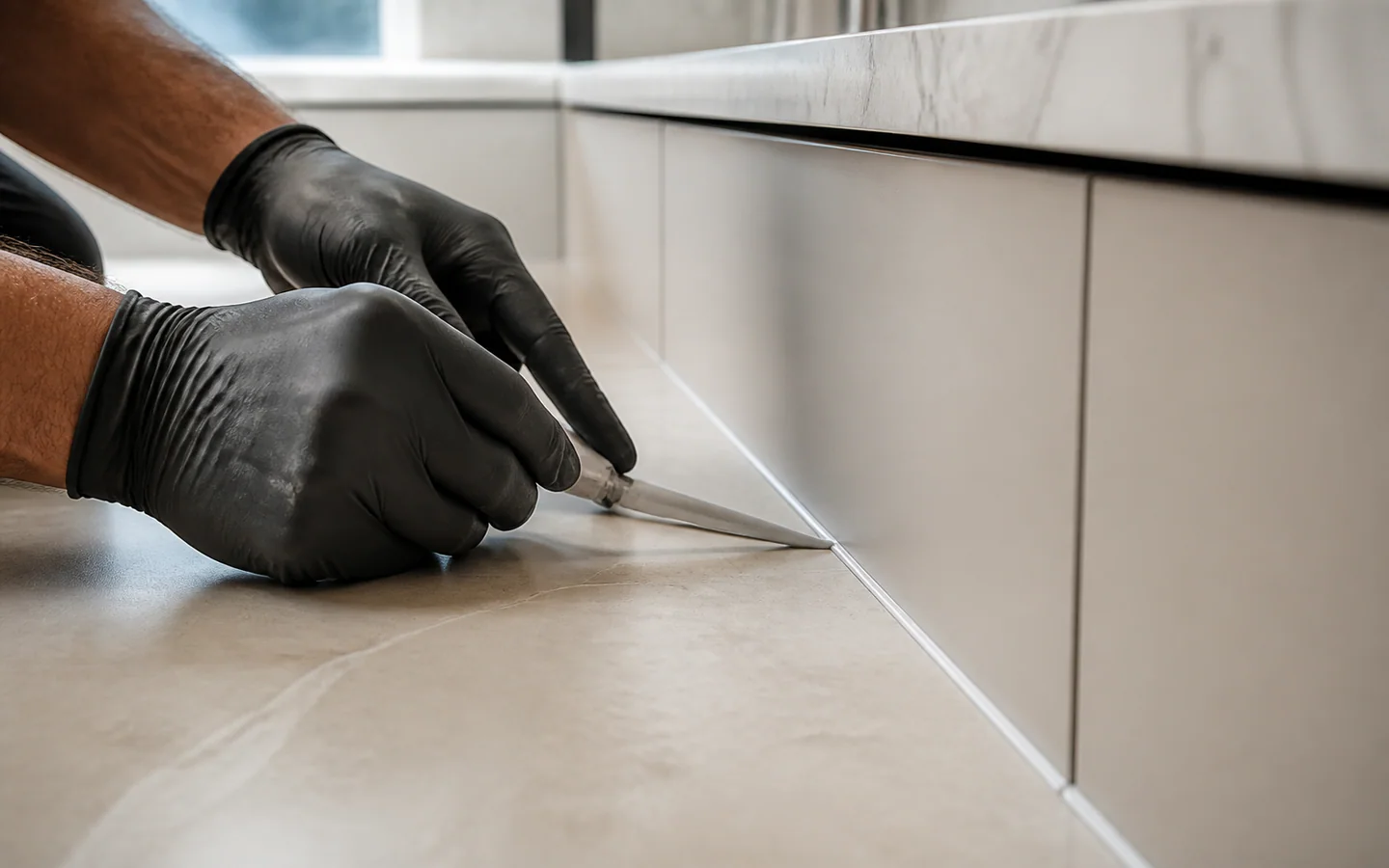
- Neat edge finishing: apply a consistent bead and tool it to suit the corner or joint geometry. The finished appearance depends on substrate preparation and application technique.
- Confirm the grade-specific weathering test conditions and results. Service life depends on exposure, application and maintenance.
- Flexibility and adhesion: verify elongation, substrate movement and bond strength against the grade-specific test data. Prepare the joint and substrate according to the application instructions.
- For wet areas, verify water resistance, adhesion and joint detailing under the intended exposure.
- Review the grade-specific SDS, emissions data and ventilation requirements. Wear appropriate protective equipment; special contact uses require specific evidence.
- Compatible with multiple materials: more than 40 colors and custom options for tiles, stone, wood, glass and carbon-crystal panels, supporting a consistent decorative finish.
Applications
For tile and stone joints in kitchens, bathrooms, balconies and rooms with underfloor heating, as well as suitable commercial and exterior applications. Confirm compatibility with the substrate and service conditions. Pools, saunas and other continuously wet or high-temperature locations require specific suitability checks.
Storage
This product is combustible. Store sealed in a cool, dry, ventilated area at or below 35°C. Keep away from flames, heat, direct sunlight, oxidizing agents and acids. The stated storage period is 12–18 months; confirm the shelf life and storage requirements for the supplied grade and batch using its label and technical documents.
Key notes
These parameters represent typical performance ranges. Follow the product TDS/SDS, batch test report and actual service conditions. Contact us for the relevant documents, samples and application recommendations.
View more products
Our polyaspartic product range serves a variety of industries.
Return to Product Center