
Long-lasting protection of the marine and high salt spray environment
Coating design and maintenance considerations where salt spray, moisture, UV exposure and mechanical erosion act together.
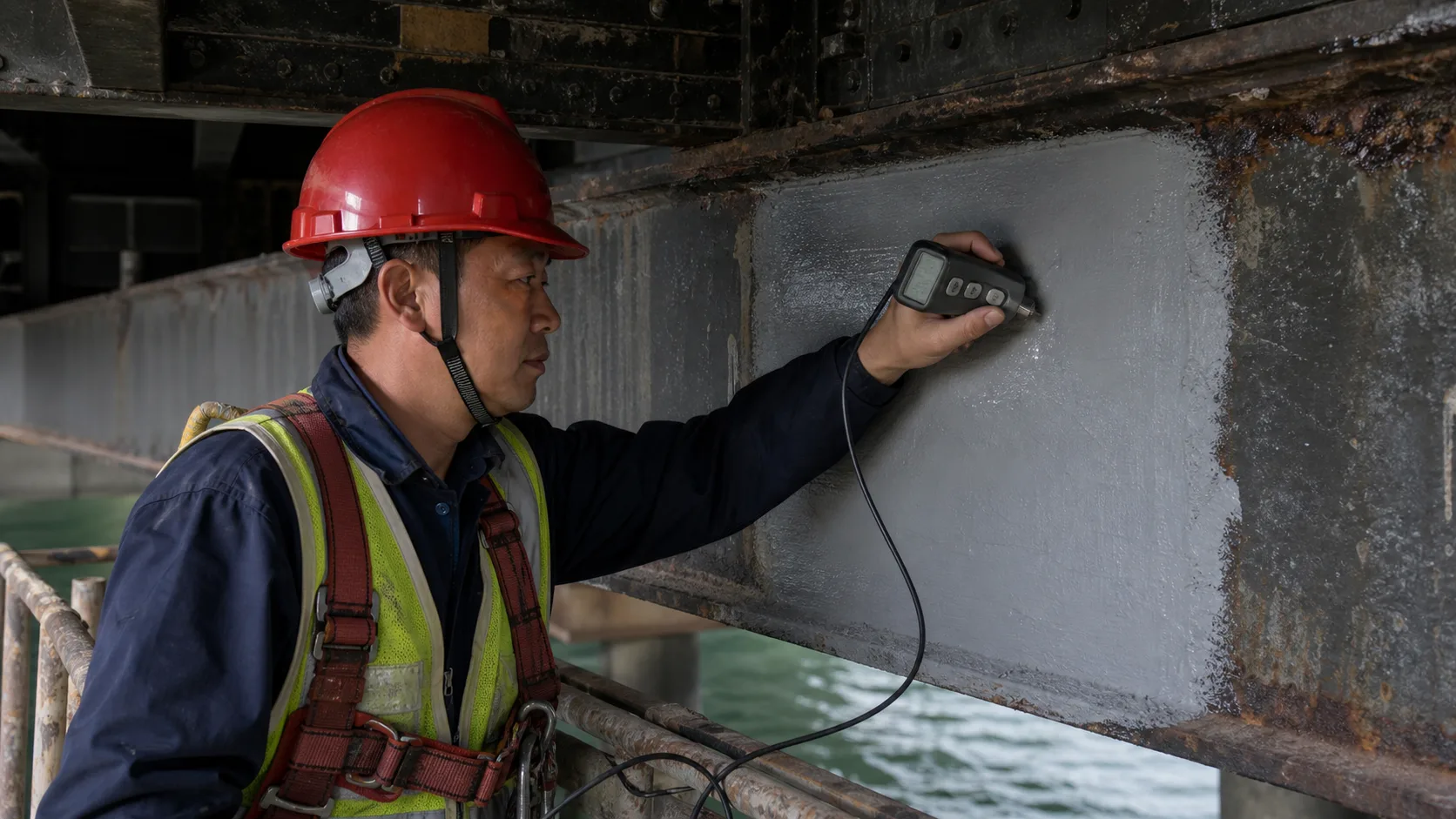
A worker using an instrument to inspect a coating on a steel panel
It's not a single salt spray.
Marine facilities face salts, heat, humidity, UV, wet/dry cycling and mechanical erosion together. Immersion time, oxygen availability and maintenance access vary substantially by location, so specify coating systems by exposure zone.
Surface treatment and edge coverage
In high-salt environments, pay special attention to soluble salts, oil contamination and flash rust. Round sharp edges and stripe-coat welds and connections to avoid insufficient thickness at vulnerable details.
Select a weather-resistant topcoat
For exposed areas, assess gloss and color retention, chalking and recoatability. For prolonged immersion, verify the specific product's hydrolysis resistance, adhesion stability and compatible underlying layers. Test reports should match the intended medium and exposure mode.
Inspection and repair
Maintain coating records by area, including initial thickness, defect locations and repair materials. If scratches, rust, blisters or edge failures appear, extend the inspection and complete local repairs promptly.
Maritime delimitation and risk identification
At a minimum, distinguish atmospheric, splash, tidal and continuous-immersion zones. Atmospheric exposure involves salt deposition, UV and condensation; splash zones combine oxygen, salts and repeated wetting; tidal zones experience wet/dry cycling and mechanical erosion; immersed zones require assessment of long-term water uptake, hydrolysis and compatibility with cathodic protection. Different heights on the same structure may experience very different corrosion conditions. Specify materials, target film thickness and inspection frequency by zone rather than relying on a single salt-spray result.
A site survey should record prevailing sea winds, splash height, maintenance access, shutdown constraints, temperature variation, solar exposure and biological contamination such as bird droppings. Bridges, piers and offshore platforms have many connections; welds, bolts, poorly drained corners and contacts between dissimilar metals may fail first. Improve drainage, reduce salt-retaining ledges and provide inspection access during design. Coatings are an important barrier, but structural details, sealing and drainage also determine long-term performance.
Construction control and performance verification
Control soluble salts and condensation during coastal application. Measure surface salts before and after blasting, then remove dust and prime promptly. Continuously record air and steel temperatures, relative humidity and dew-point margin. High winds can cause overspray loss and contaminate adjacent areas; steel can develop condensation at night or early morning, so define stop-work conditions. Rounded edges, dressed welds and stripe coats improve actual thickness at vulnerable locations. Apply subsequent coats within their recoat windows to prevent salt deposits between layers.
Laboratory testing should approximate the combined failure conditions. Alongside neutral salt spray, consider cyclic corrosion, UV weathering, immersion, thermal cycling, adhesion retention and scribe creep. Check the panel substrate, preparation grade, materials in each layer, total thickness, cure and acceptance criteria. A single result such as 2,000 hours does not directly predict service life; consider structure, application quality, exposure and maintenance, with long-term site panels where needed.
Inspection patches and full life management
At handover, map components and record thickness points, colors, batches, holiday repairs and site photos. Set inspections by exposure zone: chalking, gloss loss and scratches in atmospheric areas; blisters, rust and edge failure in splash zones; and shutdown access for tidal and immersion areas. Remove salt deposits using methods that do not damage the coating. Record the extent, location, rate of development and possible cause of each defect.
For local repairs, feather the coating edges and thoroughly remove salts, oil and loose material. Confirm adhesion of the remaining coating before rebuilding the compatible layers. Simply painting over a rust spot can trap contaminants and corrosion products. Repair materials must be compatible with the original system and suitable for site temperature, humidity and working time. Organize maintenance into minor repairs, planned intermediate repairs and major refurbishment when necessary, keeping work within manageable shutdown windows.
Project landing and risk review
Before work begins, the project lead should review site conditions with the designer, material supplier, applicator and owner, converting drawing requirements into an actionable area checklist. Include substrate type and condition, coating layers and thicknesses, details, material batches, mixing quantities, tools, crew responsibilities, environmental controls, recoat times and return-to-service conditions. Coordinate other trades, temporary power, ventilation, fire precautions and protection of completed work so that welding, cutting, dust and equipment installation do not interfere with coating. Inspect the first completed area and compare consumption and cure with the trial area before continuing at scale.
Use inspection hold points throughout the work instead of waiting until all surfaces are covered. Inspect and retain photographs and data after substrate preparation, primer sealing, defect repair, reinforcement of critical details and before final handover. If material condition, environmental limits, batch changes or widespread defects raise concerns, isolate the area, retain samples and records, and obtain a technical assessment. Every rework record should identify the failed interface, repair area, materials and retest results. Trial areas, witnessed process checks, traceable records and verified repairs help translate laboratory performance into reliable field performance.