
Polyaspartic Waterproofing: Selection to Acceptance
A guide to assessing substrates, specifying coating layers, reinforcing details and inspecting completed waterproofing on roofs, in underground spaces and in damp areas.
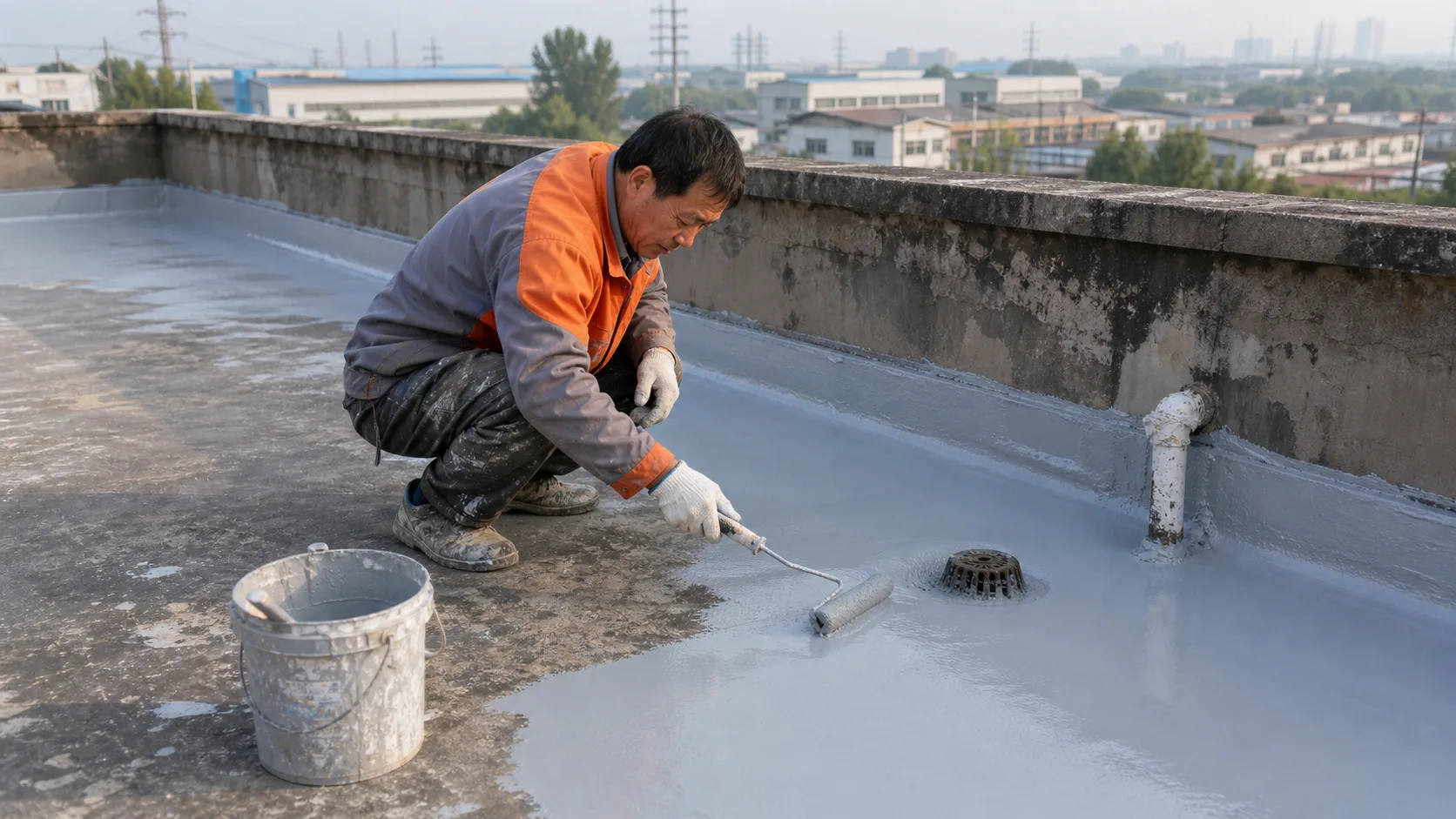
A worker applying gray waterproofing material around a roof penetration
Project conditions first.
Record the substrate, service environment, whether exposure is external or continuously immersed, and subsequent loads. For underground areas, also identify positive-side or negative-side water pressure and the risk of persistent moisture.
Selection should consider adhesion, flexibility, weathering, water resistance and recoat windows together, rather than relying only on a waterproofing label.
Create complete coating structure
A typical system includes a sealing primer, leveling intermediate coat, reinforcement at vulnerable details and a polyaspartic topcoat. Seal pores in porous concrete first; reinforce cracks, corners, pipe penetrations and drains according to the detail design.
Apply successive coats within the specified recoating window. If it has expired, clean, sand or prepare the interface as required by the product technical documents.
Construction process control
Weigh components accurately, mix thoroughly at low speed and use each mix promptly. Record ambient temperature and humidity, substrate temperature, dew-point margin, mixing batch and actual consumption during application.
Control thickness using calculated consumption, spot checks of wet-film thickness and final thickness verification. Avoid applying an excessively thick coat in a single pass.
Acceptance and delivery
The finish should be continuous and uniform, without missed areas, pinholes, bubbles, cracks or delamination. Carry out flood or water-retention testing only after the specified curing period.
Follow the design documents, product TDS and project technical agreement for thickness, test duration and acceptance criteria.
Design deepening and material selection
Develop the waterproofing design around the source, movement and drainage of water. Roofs require consideration of rainfall, standing water, thermal movement and UV. Underground areas require a distinction between positive-side and negative-side exposure and confirmation of whether structural cracks are still moving. Equipment foundations, trenches and washrooms may also face vibration, cleaning water and chemicals. Select primer sealing, intermediate reinforcement and topcoat weather resistance after establishing these conditions; one waterproofing classification does not describe every location. Specify detail treatments, target dry-film thickness, theoretical consumption per unit area, tolerances and repair interfaces so procurement, application and inspection use the same criteria.
Because polyaspartic materials react quickly, the application plan must match site capacity. Divide large roofs into zones and continuous work strips, planning mixing stations, transport routes, termination points and staffing. Coordinate color, batches and application direction to reduce overlap differences. For unfamiliar materials or complex existing substrates, build a complete-system trial area and assess penetration, bubbling, curing, adhesion and appearance before expanding the work.
Construction and process records for nodes
Form smooth, continuous curves at internal and external corners, remove loose material around pipe penetrations and ensure drain levels produce the correct fall. Determine whether cracks are static or moving: stable cracks may be routed, repaired and reinforced, while moving cracks need a detail that accommodates movement. Construction joints, movement joints and interfaces between different materials require specified sealants, reinforcement or flexible layers, rather than a simple topcoat covering. Check each completed detail for continuity, lifted edges, voids and inclusions before coating the whole area.
Record the date, area, weather, ambient temperature and humidity, substrate temperature, dew-point margin, substrate condition, material batch, A/B weights, mixing times, end of use and consumption. Adjust batch size to temperature and material condition, rather than changing the mixing ratio. Recheck substrates after rain, overnight moisture or morning condensation. Stop covering areas with bubbles, pinholes or whitening until moisture, outgassing or contamination has been identified.
Receiving and inspection, protection and maintenance
Inspect appearance, thickness, details and function. The coating should be continuous and uniform, without missed areas, buildup, cracks, pinholes or abnormal tackiness. Sample thickness at agreed locations and frequencies, including difficult areas. Check pipe penetrations, drains, parapet terminations and equipment bases individually. Perform flood testing only after the specified cure, protecting immature surfaces and recording drainage, ponding and leakage into adjacent areas.
After handover, inspect roofs for blocked drains, damage from sharp objects, maintenance traffic and new penetrations. Repair scratches before moisture or contamination reaches the underlying layers. Clean and abrade to a sound interface, rebuild the compatible layers and feather repair edges. Do not cover defects with unidentified sealants or incompatible coatings. Retain material grades, color codes, batches, site photos and system details for future maintenance.
Project landing and risk review
Before work begins, the project lead should review site conditions with the designer, material supplier, applicator and owner, converting drawing requirements into an actionable area checklist. Include substrate type and condition, coating layers and thicknesses, details, material batches, mixing quantities, tools, crew responsibilities, environmental controls, recoat times and return-to-service conditions. Coordinate other trades, temporary power, ventilation, fire precautions and protection of completed work so that welding, cutting, dust and equipment installation do not interfere with coating. Inspect the first completed area and compare consumption and cure with the trial area before continuing at scale.
Use inspection hold points throughout the work instead of waiting until all surfaces are covered. Inspect and retain photographs and data after substrate preparation, primer sealing, defect repair, reinforcement of critical details and before final handover. If material condition, environmental limits, batch changes or widespread defects raise concerns, isolate the area, retain samples and records, and obtain a technical assessment. Every rework record should identify the failed interface, repair area, materials and retest results. Trial areas, witnessed process checks, traceable records and verified repairs help translate laboratory performance into reliable field performance.