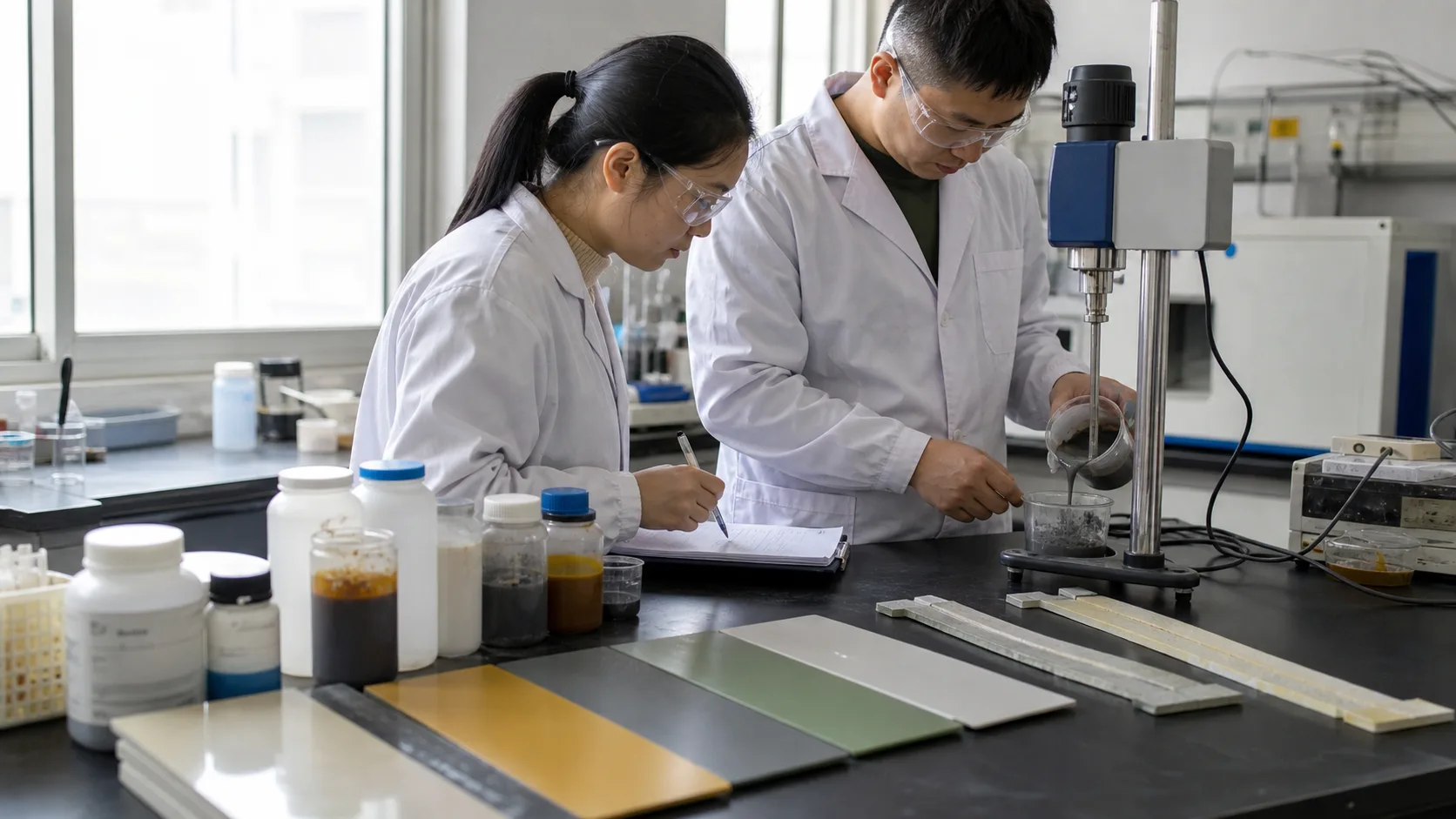
I. What is a polyaspartic polyurea?
Polyaspartic coating systems use amine-functionalpolyasparticresins with compatible isocyanate hardeners. Weathering, curing and mechanical behavior depend on the actual chemistry and formulation.
Polyaspartic ester chemistry provides formulation options for reaction rate and film properties. Evaluate the completed coating system rather than inferring performance from its name.
Core performance characteristics
2.1 Curing behavior
Working time, touch dry, readiness for traffic and full cure are distinct stages. Use the grade-specific TDS and actual temperature and humidity when planning work.
2.2 Weathering behavior
Review weathering data for the selected grade, color and film thickness. Accelerated exposure tests support comparisons under defined conditions; they do not establish universal outdoor service years.
2.3 Adhesion
Test:GB/T 5210-2006 / ISO 4624
Evaluation:Confirm substrate preparation, primer, film thickness, cure and test method. Record the failure mode as well as the measured strength.
2.4 resistant to chemical corrosion
- Acid exposure: assess the chemical, concentration, temperature and contact duration.
- Alkali exposure: verify resistance under the intended concentration and temperature.
- Salt exposure: distinguish salt-spray testing from immersion and actual service.
- Water exposure: verify immersion conditions, cure and film integrity.
2.5 Mechanical Performance
- tensile strength :Grade-specific test value
- elongation at break :Grade-specific test value
- Hardness:Grade-specific test value
- Abrasion:Compare values only under consistent wheels, loads, cycles and conditioning.
2.6 Environmental performance
Review solids content, VOC and hazardous-substance data—Use applicable product standards and grade-specific reports. Follow the SDS, ventilation and protective-equipment requirements; low odor is not proof of safety.
III. Typical application scenarios
3.1 Waterproof Project
Polyaspartic polyureaWaterproof coatingsRoof, basement, wet-room and pool projects require different substrate preparation, detailing and acceptance tests. Confirm the complete system for the actual exposure.
3.2 corrosion Project
Polyaspartic polyureaAnti-corrosion coatingsAssess the actual chemical medium, concentration, temperature and exposure. Atmospheric corrosion and prolonged immersion require separate validation.
3.3 flooring Project
Polyaspartic polyureaflooringSelect flooring according to traffic, wear, slip resistance, cleaning and opening-time requirements. Specialist workshop requirements need their own evidence.
3.4 Decoration Project
Decorative uses require agreement on color, gloss, adhesion, weathering and maintenance. Verify a sample before large-area application.
IV. Compare specific products under consistent conditions
Concluding remarks
Select coatings according to documented project requirements, system compatibility and application conditions. Junaimei provides product information and technical support for evaluating suitable options.